Harvie Ken Colonia

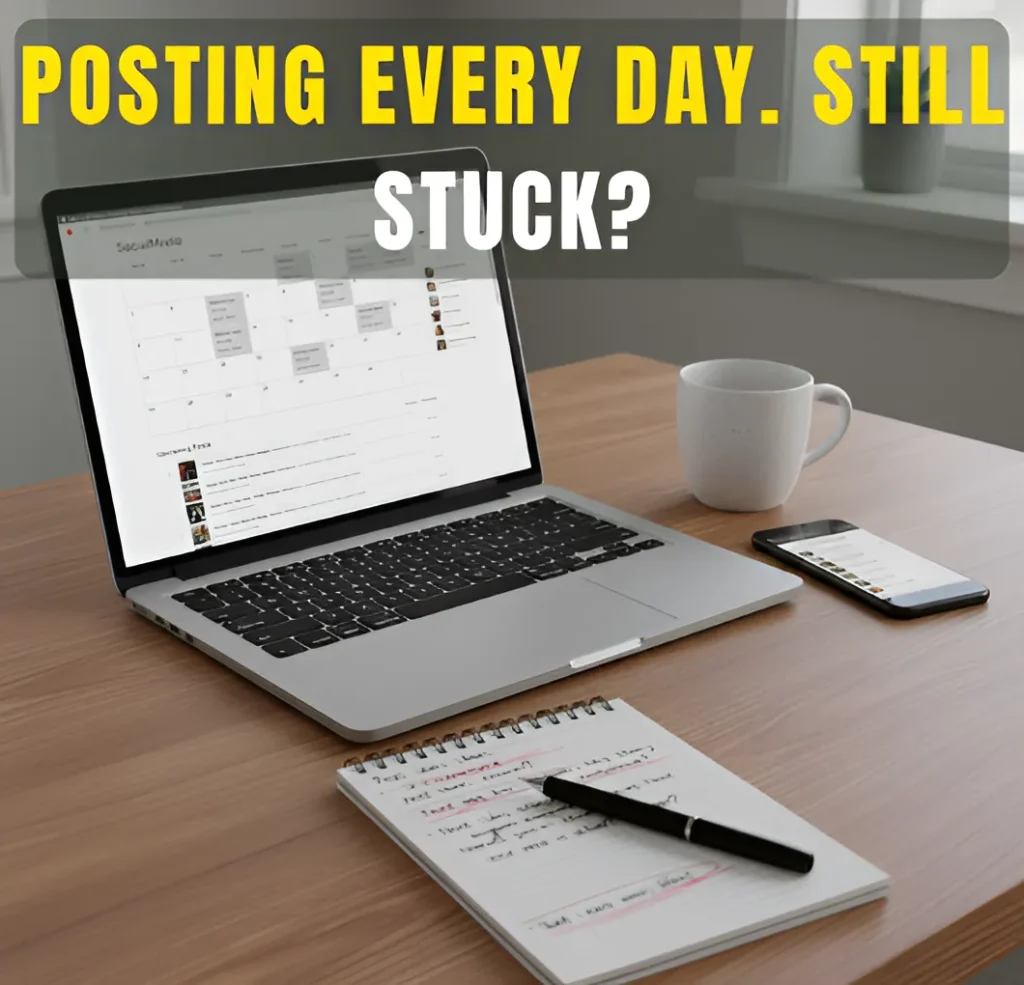
Laptop on a wooden desk displaying a social media content calendar with scheduled posts, alongside a notebook and phone, representing daily posting without clear results.

Why Your Social Media Isn’t Working (Even If You Post Every Day)

Services Search Engine Optimization (SEO) Google Business Profile Optimization Graphics Design Social Media Marketing My Process FAQs Articles About Contact Services Search Engine Optimization (SEO) Google Business Profile Optimization Graphics Design Social Media Marketing My Process FAQs Articles About Contact Wanna Chat?   What Makes Some Social Media Posts Actually Work Why Your Social Media Isn’t Working (Even If You Post Every Day) Learn which types of social media posts lead to real conversations, inquiries, and customers.   The Real Reason Posting Every Day Isn’t Working Posting every day is not the problem. The frustration usually starts when you keep showing up and nothing seems to change. You post, check your insights, and move on to the next day. Maybe a post does okay, maybe it does not. Either way, it never really feels like things are building. It just feels like work. That usually happens when content goes out without a clear purpose. Not a trend or an idea, but a reason. Something that moves people forward instead of just filling a feed. Social media works in a simple order: attention, relevance, trust, then action. If one of those pieces is missing, posting turns into effort without results. Most of the time, it is not an algorithm problem. It is a direction problem. What You’ll Learn in This Guide Why Most Social Media Posts Don’t Lead to Customers Why Most Social Media Posts Don’t Lead to Customers Problem–Solution Posts That Attract Buyers Problem–Solution Posts That Attract Buyers Customer Results and Real Stories Customer Results and Real Stories Behind-the-Scenes Posts That Build Trust Behind-the-Scenes Posts That Build Trust Educational “Save This” Posts With High Intent Educational “Save This” Posts With High Intent Mistake or Myth-Busting Posts That Create Urgency Mistake or Myth-Busting Posts That Create Urgency How Often to Post These Without Burning Out How Often to Post These Without Burning Out How I Can Help Make Social Media Easier How I Can Help Make Social Media Easier Final Takeaway: Fewer Posts, Better Results Final Takeaway: Fewer Posts, Better Results Frequently Asked Questions Frequently Asked Questions About the Author About the Author Why Posting Every Day Still Isn’t Getting You Results Posting every day only helps if something about your content makes people stop. When it does not, daily posting just means you are giving the platform more chances to watch people scroll past. Social platforms pay attention to how posts are treated, not how often they are published. If people pause, watch, read, or react, reach grows. If they skim and move on, reach quietly drops, even if you are consistent. This is where a lot of effort goes to waste. You might feel visible because you are posting regularly, but visibility is not the same as impact. Being seen for half a second is not the same as holding attention long enough to matter. That is why consistency alone stops working. The platform is not asking how often you post. It is watching what people do when you do. What Actually Needs to Be in Place for Social Media to Work For social media to work, people need to understand you fast. Not everything about you, just the basics. What you help with. Who it is for. If someone has to think too hard to figure that out, they usually keep scrolling. Content also needs a clear reason behind it. Not every post has to sell something, but it should not exist just to fill space. Some posts help people understand a problem. Some help them trust you more. Some make them stop and think. When posts are shared without a reason, they blend in and get forgotten. Another thing that matters is what happens next. After someone watches a video or reads a post, there should be a natural next step. That might be checking your profile, sending a message, or simply paying more attention the next time you show up. When there is no clear next step, interest fades quickly. When these pieces are missing, social media feels random. You might get a few likes here and there, but nothing really builds. When they are in place, posting feels lighter. Your content starts working together instead of fighting for attention. Step 1: Stop Treating Consistency as the Strategy “Just stay consistent” is advice almost everyone hears. Post every day. Do not miss a day. At first, that helps. It gets you moving and keeps you from overthinking. But after a while, you start to wonder what all that posting is actually doing. This is usually how it plays out: ● You post because it is time to post. Not because you have something clear to say, just because the calendar says you should. ● You reuse the same ideas in different ways. New hook, new format, same message. It feels new, but it is not really going anywhere. ● You check your insights more than you want to admit. You are hoping something finally looks different. Most days, it does not. ● You feel pressure to show up even when you are not sure why. Posting turns into something you have to do, not something you choose to do. ● You are busy, but you cannot point to progress. You are consistent, but nothing feels clearer, easier, or more effective. Posting every day can work, but only when it supports something solid. A clear message. A focus people recognize. Without that, consistency becomes the goal instead of the tool. Step 2: Get Clear on Who Your Content Is Really For A lot of social media content misses because it is trying to speak to too many people at once. The post is not bad. It is just not clear who it is meant for. When that happens, people scroll past without really thinking about it. Most of the time, this shows up in small ways: ● You say “business owners” or “creators,” but you are not sure which ones you actually want ● The advice

Why Your Social Media Isn’t Working (Even If You Post Every Day) Read More »

Person planning social media strategy on a laptop and notebook to turn followers into paying clients.

How to Turn Your Social Media Followers Into Paying Clients

Services Search Engine Optimization (SEO) Google Business Profile Optimization Graphics Design Social Media Marketing My Process FAQs Articles About Contact Services Search Engine Optimization (SEO) Google Business Profile Optimization Graphics Design Social Media Marketing My Process FAQs Articles About Contact Wanna Chat?   From Followers to Clients How to Turn Your Social Media Followers Into Paying Clients Learn how to move followers from interest to trust, conversation, and action.   The Fast Answer (Start Here) Having a lot of social media followers does not mean you are going to get clients. Followers show interest, not buying intent. What actually turns followers into paying clients is a simple path that moves them from noticing your content to trusting you enough to take the next step. That path looks like this: attention → trust → conversation → action. Most people get stuck because they focus on posting and growing, but never make it clear who they help, what problem they solve, or how someone should reach out. When those pieces are missing, even an engaged audience stays on the sidelines. If you want followers to convert, your content needs to attract the right people, build confidence in your expertise, and make starting a conversation feel natural. What You’ll Learn in This Guide Step 1: Pick One Primary Platform (And One Backup) Step 1: Pick One Primary Platform (And One Backup) Step 2: Identify Exactly Who You Want as Clients Step 2: Identify Exactly Who You Want as Clients Step 3: Make Your Profile Convert Step 3: Make Your Profile Convert Step 4: Post Content That Creates Buyers, Not Just Views Step 4: Post Content That Creates Buyers, Not Just Views Step 5: Start Conversations That Lead to Sales Step 5: Start Conversations That Lead to Sales Step 6: Use Trust Accelerators Step 6: Use Trust Accelerators Step 7: Give Followers a Reason to Take Action Now Step 7: Give Followers a Reason to Take Action Now Step 8: Capture Leads Off Social (Without Killing Momentum) Step 8: Capture Leads Off Social (Without Killing Momentum) Step 9: Measure, Learn, and Optimize What Actually Converts Step 9: Measure, Learn, and Optimize What Actually Converts How I Can Help You Turn Followers Into Paying Clients How I Can Help You Turn Followers Into Paying Clients Final Takeaway: Fewer Posts, Better Results Final Takeaway: Fewer Posts, Better Results Frequently Asked Questions Frequently Asked Questions About the Author About the Author Step 1: Pick One Primary Platform (And One Backup) Trying to be active on every platform at once usually does more harm than good. What matters is showing up consistently where your potential clients already spend time. Look for the platform where conversations related to your service are already happening. That is often where people: ● Ask questions you know how to answer● Follow others who offer similar services● Read comments and replies before reaching out● Spend enough time to actually pay attention When you focus on one main platform, everything becomes easier. You start to: ● Notice which topics spark real conversations● See patterns in the questions people ask● Get clearer feedback on what resonates and what does not A backup platform can still play a role, but it should stay simple. Use it to: ● Re-share content that already worked● Stay visible without creating extra work● Catch the attention of people who prefer a different app The goal is focus, not perfection. Once one platform starts bringing real conversations and inquiries, expanding becomes much easier. Step 2: Identify Exactly Who You Want as Clients Getting attention on social media is not the hard part. Getting attention from people who might actually pay you is. This step is about being clear on who you want to work with. When your posts talk about problems people are already dealing with, they stop scrolling. Not because they feel called out, but because they do not want to keep wasting time on things that are not working. Here is what usually makes those posts work: ● They point out a mistake people do not notice right away These posts describe things that feel normal. Habits people follow because they have always done it that way. Seeing it written down makes them pause because it feels familiar. ● They explain what goes wrong if nothing changes Not in a dramatic way. Just the slow stuff. Things take longer. Effort goes nowhere. Results feel harder to reach. That is often enough to get someone thinking. ● They clear up something people often get wrong Many people think they know why something is not working, but they are looking at the wrong part of the problem. Good posts help them see it differently. ● They talk about real situations, not job titles People connect to moments they are in, not labels. When a post sounds like something they are going through, it feels personal. ● They make the next step feel easy When the problem makes sense, reaching out does not feel like a big decision. It feels like the next thing to try. The clearer you are about who you want to help and what they are stuck on, the easier it becomes to attract followers who turn into clients. Step 3: Make Your Profile Convert Most people decide what they think about your profile in a few seconds. If they cannot tell what you do or who you help, they move on. Your profile does not need to sound smart. It needs to make sense. Here are the three things that matter most: ● Say clearly who you help and what you help with One short line is enough. Avoid broad claims. If someone has to reread it to understand, it is too complicated. ● Show that real people trust you This could be a short result, a quote from a client, or a simple mention of work you have done. It does not need to be perfect. It just needs to feel honest. ● Tell people what

How to Turn Your Social Media Followers Into Paying Clients Read More »

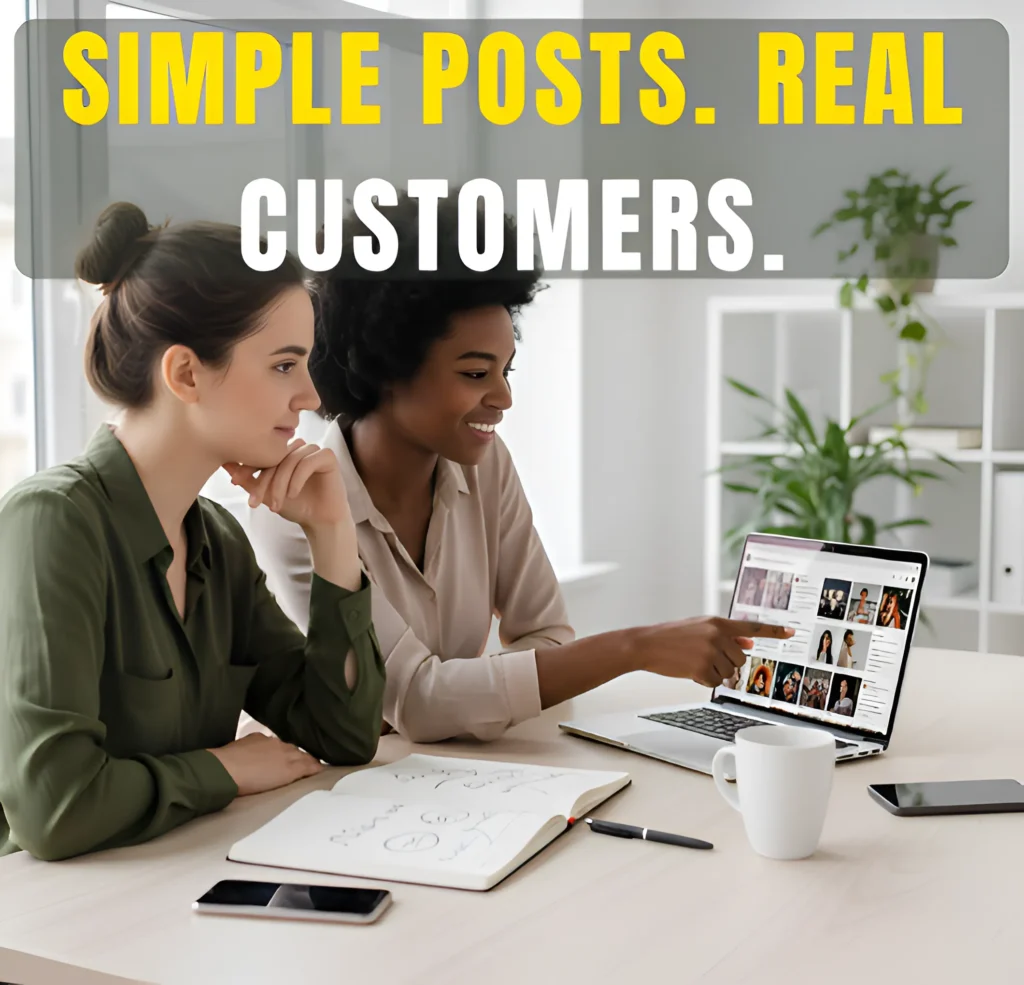
Two professionals sitting at a desk reviewing social media content on a laptop, discussing post ideas together in a relaxed workspace.

Easy Social Media Post Ideas That Bring in Real Customers

Services Search Engine Optimization (SEO) Google Business Profile Optimization Graphics Design Social Media Marketing My Process FAQs Articles About Contact Services Search Engine Optimization (SEO) Google Business Profile Optimization Graphics Design Social Media Marketing My Process FAQs Articles About Contact Wanna Chat?   What Makes Some Social Media Posts Actually Work Easy Social Media Post Ideas That Bring in Real Customers Learn which types of social media posts lead to real conversations, inquiries, and customers.   Quick Answer: What Social Media Posts Actually Bring in Customers Social media posts that bring in customers usually help with a real problem. They speak to something people are already dealing with, not just something that looks good on a feed. Posts made only to get likes might get attention, but they rarely turn into messages, calls, or sales. The posts that work best feel useful and honest. They explain something clearly, share a real result, or show how a problem gets handled. When people see content they can relate to, they start to trust the business behind it. Good posts also make it easy to know what to do next. That could be saving the post, asking a question, or reaching out for help. When a post is clear, helpful, and points people in the right direction, it does more than get engagement. It brings in real customers. What You’ll Learn in This Guide Why Most Social Media Posts Don’t Lead to Customers Why Most Social Media Posts Don’t Lead to Customers Problem–Solution Posts That Attract Buyers Problem–Solution Posts That Attract Buyers Customer Results and Real Stories Customer Results and Real Stories Behind-the-Scenes Posts That Build Trust Behind-the-Scenes Posts That Build Trust Educational “Save This” Posts With High Intent Educational “Save This” Posts With High Intent Mistake or Myth-Busting Posts That Create Urgency Mistake or Myth-Busting Posts That Create Urgency How Often to Post These Without Burning Out How Often to Post These Without Burning Out How I Can Help Make Social Media Easier How I Can Help Make Social Media Easier Final Takeaway: Fewer Posts, Better Results Final Takeaway: Fewer Posts, Better Results Frequently Asked Questions Frequently Asked Questions About the Author About the Author Why Most Social Media Posts Don’t Lead to Customers Most social media posts don’t fail because they’re bad. They fail because they are made to get attention, not results. A post can get plenty of likes and still bring in zero messages, calls, or sales. Here’s where things usually go wrong: ● The post is made just to get reactions Likes and comments feel good, but they don’t always mean someone is interested in buying. A post can be popular and still have no impact on the business. ● There’s no clear reason for the post Many businesses post because they feel like they have to. When there’s no clear goal behind the post, the message feels random and easy to forget. ● It doesn’t connect to a real problem People stop scrolling when they see something that feels familiar. If a post doesn’t reflect something they’re dealing with right now, it usually gets ignored. ● Nothing tells the reader what to do next Even if someone is interested, they won’t always take action on their own. Without a simple next step, interest ends at the scroll. Once posts are created with a clear purpose, social media starts working differently. The right post types help people understand what you do, trust your experience, and feel comfortable reaching out. Problem Solution Posts That Attract Buyers Problem solution posts work because they talk about real situations people deal with every day. Instead of leading with what you sell, these posts start by pointing out a problem your audience already recognizes. When someone thinks, “That’s exactly what I’m dealing with,” they stop scrolling. Here’s what makes these posts effective: ● They describe a problem people already know well The post doesn’t try to educate from scratch. It names a frustration, mistake, or situation that feels familiar, which makes the message easier to connect with. ● They show you understand the situation When the problem is explained clearly and simply, people feel like you’ve seen this before. That understanding builds trust without needing to say it directly. ● They show a clear way forward The solution is explained in a practical way, not as a pitch. This helps people see that the problem can be handled and that there’s a better outcome. ● They let interest build naturally Instead of pushing an offer, the post lets the reader connect the dots. When they need help, they already know who to reach out to. Problem solution posts don’t try to convince people to buy on the spot. They make your business the obvious choice when the time comes. Customer Results and Real Stories Posts about customer results work because they show what really happened. Not promises. Not big claims. Just real outcomes from real people. Instead of talking about how great your business is, these posts show the change. What was the problem before, and what’s better now. ● They show the change clearly. People want to see what improved. That could be less stress, fewer issues, or better results. ● They share real details. Simple facts make a big difference. A timeline, a small win, or a clear outcome helps the story feel real. ● They keep things short and honest. Long testimonials often feel forced. Short stories feel more natural and easier to believe. ● They build trust without hype. When the post sticks to what happened, people trust it more. When people see results from someone like them, it feels safer to reach out. They can picture the same thing happening for them. Behind-the-Scenes Posts That Build Trust Behind the scenes posts work because they show how the work really gets done. Not the final result, but the steps in between. This helps people understand what they are actually paying for. What matters with these posts is what

Easy Social Media Post Ideas That Bring in Real Customers Read More »

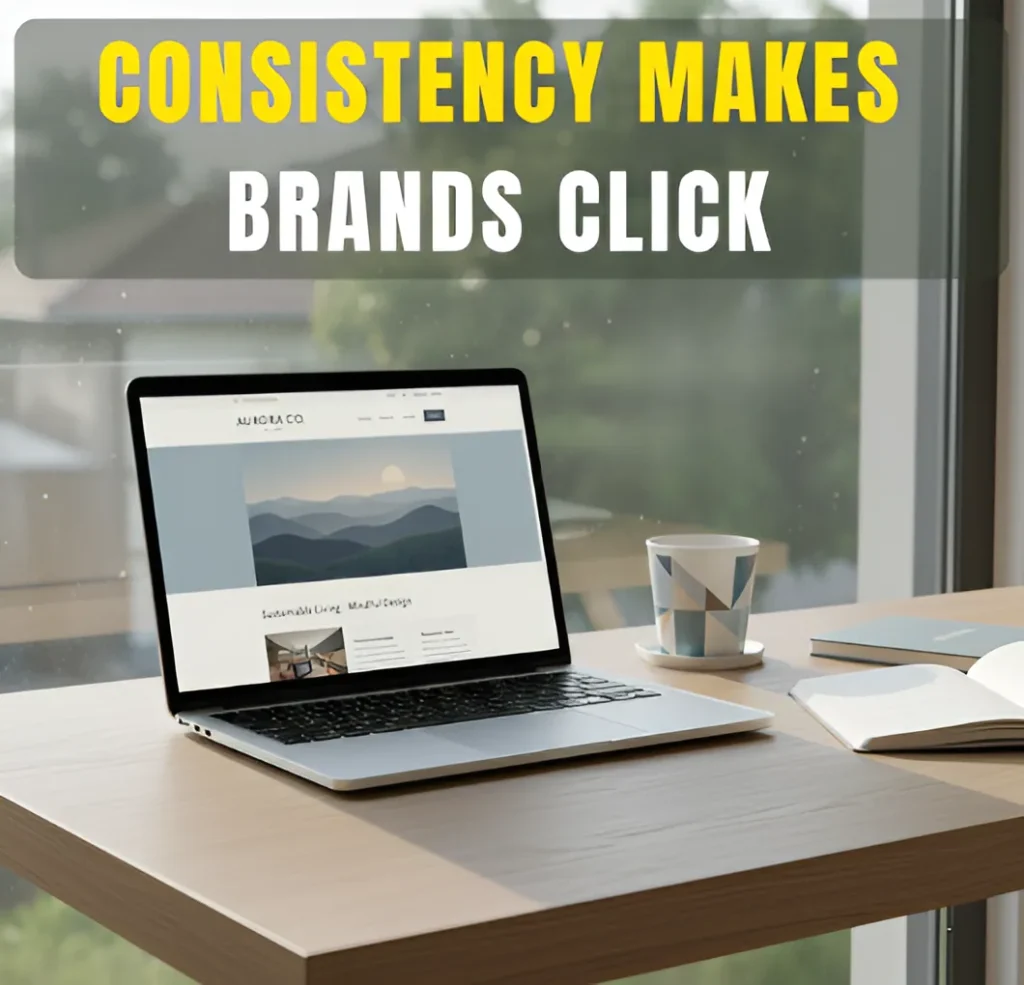
Modern workspace with a laptop on a desk displaying a clean, well-structured website, representing how consistent branding helps businesses stand out and earn clicks online.

Why Consistent Branding Makes a Big Difference Online

Services Search Engine Optimization (SEO) Google Business Profile Optimization Graphics Design Social Media Marketing My Process FAQs Articles About Contact Services Search Engine Optimization (SEO) Google Business Profile Optimization Graphics Design Social Media Marketing My Process FAQs Articles About Contact Wanna Chat?   Why Some Brands Feel Consistent and Others Do Not Why Consistent Branding Makes a Big Difference Online See how keeping your brand consistent helps people recognize and trust you faster online.   What Consistent Branding Means Online Consistent branding online means your business shows up the same way wherever people see it. Your website, social media pages, and marketing materials should all feel like they belong to the same brand. This includes how things look and how they sound. Colors, fonts, and layout help people recognize you. The words you use explain what you do and what people can expect from you. When these stay the same, your brand feels familiar instead of confusing. When branding changes from one place to another, people notice. It can make a business feel unorganized or hard to trust. Keeping everything consistent helps your brand feel clear, steady, and easy to remember. What You’ll Learn in This Guide Why Consistent Branding Matters More Than Ever Why Consistent Branding Matters More Than Ever How Consistent Branding Builds Trust and Credibility How Consistent Branding Builds Trust and Credibility The Impact of Consistent Branding on Visibility and SEO The Impact of Consistent Branding on Visibility and SEO Key Areas Where Branding Consistency Matters Most Key Areas Where Branding Consistency Matters Most What Happens When Branding Is Inconsistent What Happens When Branding Is Inconsistent How to Keep Your Branding Consistent Online How to Keep Your Branding Consistent Online How I Can Help You How I Can Help You Final Thoughts Final Thoughts Frequently Asked Questions Frequently Asked Questions About the Author About the Author Why Consistent Branding Matters More Than Ever People spend a lot of time online, and they see the same kinds of businesses again and again. Most brands only get a few seconds of attention before someone scrolls past or clicks something else. This is where consistent branding makes a real difference. When your brand looks and sounds the same each time someone sees it, it becomes easier to recognize. Familiar brands feel safer, even if people do not think about it consciously. Consistent branding helps because it: ● Makes your business easier to recognize when people see it again When someone comes across your brand a second or third time, they should know right away it is you. The same look and tone help that happen. ● Helps people remember your brand after they leave Even if someone is not ready to take action right away, consistent branding makes it more likely they will remember you later. ● Makes your business feel more real and established Brands that look put together across different platforms feel more trustworthy than ones that seem scattered or unfinished. ● Reduces hesitation when someone is deciding what to do next When everything feels connected, people are less likely to second-guess clicking, reading more, or reaching out. ● Creates a sense of comfort without needing explanations People trust what feels familiar. Consistency helps your brand feel familiar faster. When everything works together, people spend less time wondering if they can trust your business and more time deciding if it is right for them. How Consistent Branding Builds Trust and Credibility Think about the last time you landed on a website and something felt off. Maybe the colors did not match. Maybe the message felt different from what you saw on social media. Even if you could not explain why, you probably hesitated. That hesitation matters. Online, people make fast decisions. If a brand feels familiar and put together, doubt fades quicker. When it feels scattered, trust drops just as fast. First impressions happen almost instantly. Before anyone reads your content, your branding is already sending signals. A consistent look and tone tell people they are in the right place and that the business behind it is real. When everything feels connected, people relax. They are more likely to click, read, or reach out because the brand feels steady and dependable. Trust builds quietly, but it is often the reason someone decides to take the next step. The Impact of Consistent Branding on Visibility and SEO When people search online, they are not thinking about rankings or algorithms. They are looking for something that feels right. Most of the time, they click based on what looks familiar or clear. Consistent branding helps in a few very practical ways: ● People are more likely to click on something that feels familiar If someone has seen your brand name, colors, or style before, it feels safer to click. Even a small sense of recognition can make your result stand out from the rest. ● Your brand becomes easier to notice when it shows up again When your branding stays the same, people spot it faster the next time they see it in search results. They do not have to stop and figure out who you are. ● Visitors feel less confused after they land on your site When the page looks like what they expected, people feel more comfortable staying. There is no moment of doubt where they wonder if they clicked the wrong thing. ● People are more likely to stay and explore instead of leaving right away A clear and consistent look makes it easier to read, scroll, and click to another page. That extra time matters. ● Search engines notice how people interact with your site When users click, stay longer, and move around, it sends positive signals. You do not need to understand the technical side for this to work. You do not need complicated SEO tactics for consistent branding to help. When your brand is easy to recognize and easy to understand, visibility improves naturally. Key Areas Where Branding Consistency Matters Most When something

Why Consistent Branding Makes a Big Difference Online Read More »

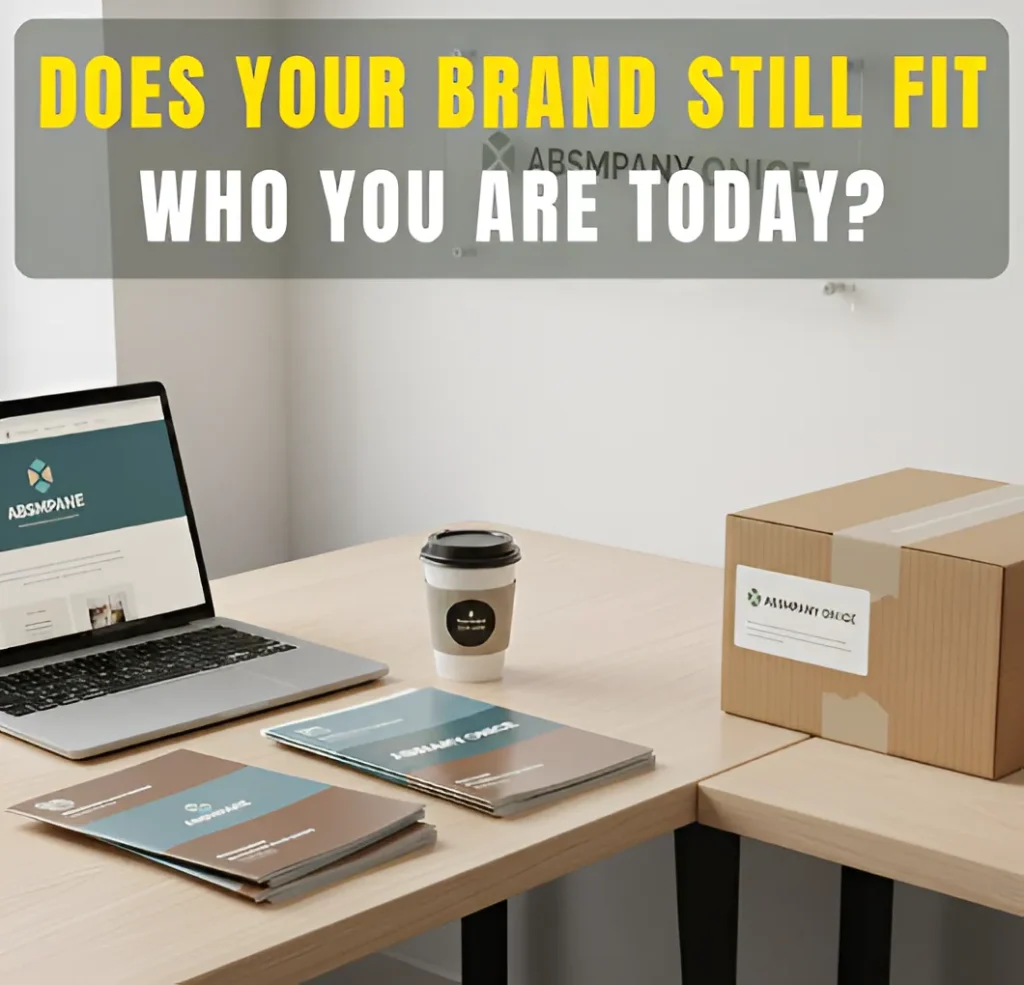
Designer workspace with a laptop displaying logo concepts, sketches, and color variations, illustrating memorable logo design principles.

The art of logo design: 5 powerful factors that make logos memorable

Services Search Engine Optimization (SEO) Google Business Profile Optimization Graphics Design Social Media Marketing My Process FAQs Articles About Contact Services Search Engine Optimization (SEO) Google Business Profile Optimization Graphics Design Social Media Marketing My Process FAQs Articles About Contact Wanna Chat?   Why Do Some Logos Stick While Others Are Forgotten? The art of logo design: 5 powerful factors that make logos memorable Discover the simple design choices that make logos easier to recognize and remember.   Why a Memorable Logo is Essential for Your Brand When people think of your business, what comes to mind first? For many, it’s your logo. A logo is the face of your brand, and it says a lot about who you are. A good logo doesn’t just look nice, it sticks in people’s minds and helps them trust your brand. In today’s crowded market, standing out is key. A logo that’s easy to remember can help set you apart from the competition and make your brand more recognizable. It’s not just a picture; it’s a symbol that tells people what your business is all about. But what makes a logo truly memorable? In this article, we’ll look at five key things that make a logo great: simplicity, distinctiveness, relevance, versatility, and timelessness. These are the building blocks of a logo that will leave a lasting impression. What You’ll Learn in This Guide Simplicity: How Keeping Your Logo Simple Enhances Recognition Simplicity: How Keeping Your Logo Simple Enhances Recognition Distinctiveness: Standing Out in a Sea of Competitors Distinctiveness: Standing Out in a Sea of Competitors Relevance: How Your Logo Should Reflect Your Brand’s Identity Relevance: How Your Logo Should Reflect Your Brand’s Identity Versatility: Ensuring Your Logo Works Across All Platforms Versatility: Ensuring Your Logo Works Across All Platforms Timelessness: Creating a Logo That Stays Relevant for Years Timelessness: Creating a Logo That Stays Relevant for Years The Psychology Behind Logo Design: How Colors and Shapes Influence Perception The Psychology Behind Logo Design: How Colors and Shapes Influence Perception The Role of Typography: Why Choosing the Right Font Matters for Your Logo The Role of Typography: Why Choosing the Right Font Matters for Your Logo The Influence of Colors in Logo Design: Understanding the Emotional Impact of Colors The Influence of Colors in Logo Design: Understanding the Emotional Impact of Colors How I Can Help You Create a Memorable Logo That Reflects Your Brand’s Essence How I Can Help You Create a Memorable Logo That Reflects Your Brand’s Essence Crafting a Logo That Will Stand the Test of Time Crafting a Logo That Will Stand the Test of Time Frequently Asked Questions Frequently Asked Questions About the Author About the Author Simplicity: How Keeping Your Logo Simple Enhances Recognition Simple logos are easier to remember. When a logo is clean and clear, people don’t have to think about it. They just recognize it.That’s why some of the most well-known logos are also the simplest. Think about Nike, Apple, or McDonald’s. There’s no extra detail, no confusion, just one clear idea. That makes these logos easy to spot and easy to recall. Here’s why keeping a logo simple works so well: ● People recognize it faster A simple logo is easy to see and easy to remember. Even at a quick glance, people know what brand it belongs to. ● It doesn’t go out of style Simple designs don’t depend on trends. That means the logo still looks good years later, without needing constant changes. ● It works anywhere Simple logos look good on websites, social media, business cards, signs, and ads. They stay clear whether they’re big or small. ● The message is clear When there’s less going on, the meaning comes through better. People understand what the brand is about without overthinking it. In the end, a simple logo helps people remember your brand without effort. And when something is easy to remember, it’s more likely to stick. Distinctiveness: Standing Out in a Sea of Competitors Your logo should make your business easy to tell apart from others. If it looks too similar to what competitors are using, people won’t remember it. When a logo feels different and original, it’s easier to notice, easier to recall, and less likely to be confused with another brand. Here’s why being different matters: ● People notice what feels new When a logo doesn’t look like everything else around it, it naturally grabs attention. That first moment of notice helps your brand stick. ● Similarity leads to confusion Logos that look alike can cause people to mix brands up. If customers can’t clearly remember which logo belongs to which business, the logo isn’t doing its job. ● Unique colors help brands stand out Color plays a big role in how people remember logos. Choosing colors that aren’t common in your industry can help your brand stand out at a glance. ● Original logos feel more confident A logo that looks original feels intentional. It gives people the impression that the business knows who it is and isn’t trying to copy others. Standing out doesn’t mean being loud or flashy. It simply means making clear choices that help your brand stay recognizable instead of blending in. Relevance: How Your Logo Should Reflect Your Brand’s Identity A logo should match the kind of business you run. When people see it, it should feel right for your brand. If the logo doesn’t fit who you are or what you do, it can confuse people instead of helping them remember you. A logo works best when it reflects your values and the message you want to send. Here’s why relevance matters: ● It sets the right first impression Your logo gives people an idea of what your business is like. When it matches your brand, people know what to expect. ● It connects with the right audience A logo that fits your brand speaks to people who are more likely to trust you and remember you. ● It keeps

The art of logo design: 5 powerful factors that make logos memorable Read More »

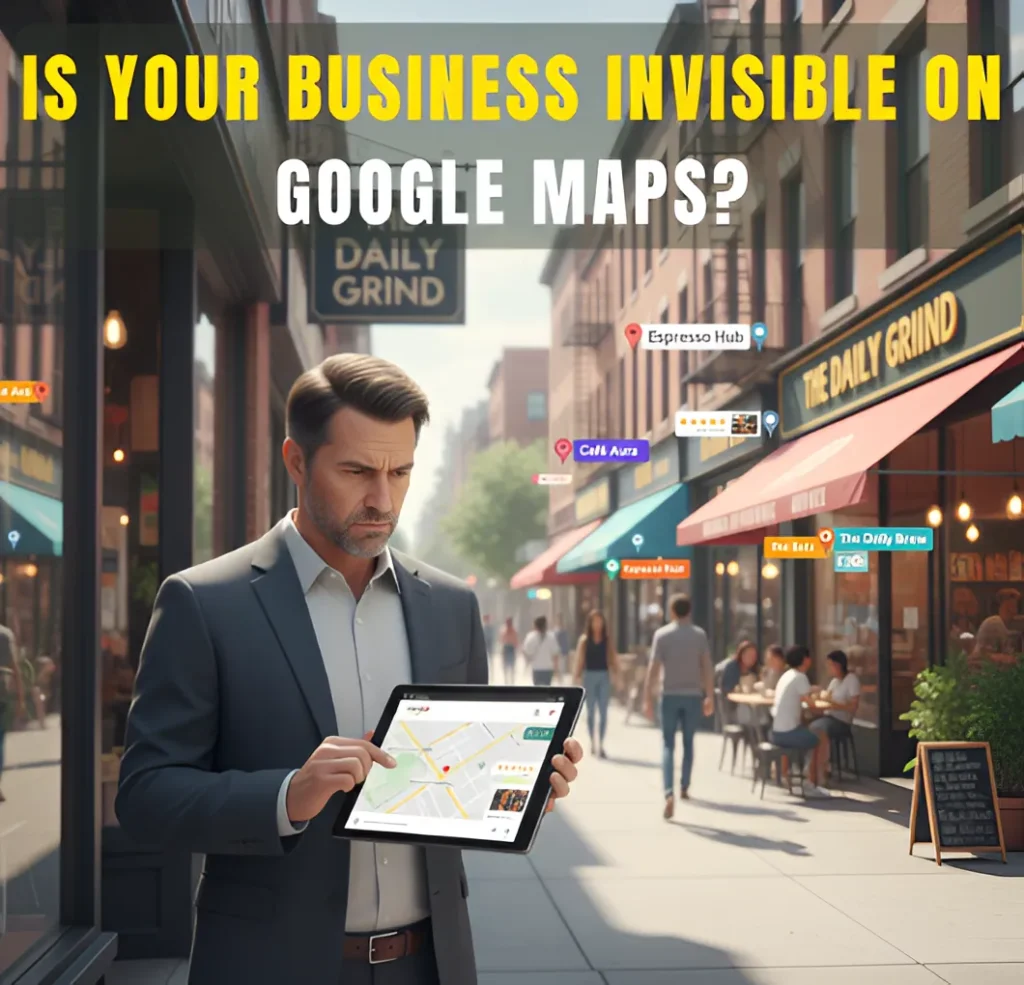
"Business owner frustrated while checking Google Maps on a tablet, noticing his business missing while competitors are visible."

Why Your Business Is Not Showing on Google Maps When Competitors Are

Services Search Engine Optimization (SEO) Google Business Profile Optimization Graphics Design Social Media Marketing My Process FAQs Articles About Contact Services Search Engine Optimization (SEO) Google Business Profile Optimization Graphics Design Social Media Marketing My Process FAQs Articles About Contact Wanna Chat?   Why Your Business Isn’t Ranking on Google Maps Why Your Business Is Not Showing on Google Maps When Competitors Are Understand why your competitors are ranking higher and get actionable steps to improve your Google Maps visibility.   Why Competitors Appear on Google Maps Before You You search for your business on Google Maps and see competitors instead. That is frustrating, especially when your profile looks fine.This happens because Google Maps does not rank businesses on its own. It compares your business to others nearby every time someone searches. If another business looks like a better match for that search and location, Google shows them first. Nothing may be wrong with your listing. The problem is often that a competitor is stronger for that search at that moment. Once you understand this, the issue makes more sense. It also becomes easier to see what needs to change. What You’ll Learn in This Guide Google Maps Is a Competitive Ranking, Not a Checklist Google Maps Is a Competitive Ranking, Not a Checklist Competitors May Be More Relevant for That Specific Search Competitors May Be More Relevant for That Specific Search Proximity Can Favor Competitors Even If Your SEO Is Solid Proximity Can Favor Competitors Even If Your SEO Is Solid Competitors Have Built More Local Trust Over Time Competitors Have Built More Local Trust Over Time Google May Be Filtering Your Listing in Competitive Areas Google May Be Filtering Your Listing in Competitive Areas Shared Locations or Similar Business Names Can Push You Out Shared Locations or Similar Business Names Can Push You Out Why Fixing Everything Still Does Not Guarantee Visibility Why Fixing Everything Still Does Not Guarantee Visibility How I Can Help Your Business Show Up on Google Maps How I Can Help Your Business Show Up on Google Maps Final Takeaway – Google Maps Visibility Is Relative Final Takeaway – Google Maps Visibility Is Relative Frequently Asked Questions Frequently Asked Questions About the Author About the Author Google Maps Is a Competitive Ranking, Not a Checklist A lot of people think Google Maps works like a checklist. Fill everything out, do the basics, and your business should show up. That would be nice, but that’s not how it actually works. Having a complete Google Business Profile just puts you in the race. It does not mean Google will pick you. When someone searches on Google Maps, your business is stacked next to others in the same area. Google looks at all of them and decides which ones to show first. Some businesses win that comparison. Others get pushed down or filtered out. Here’s what usually gives competitors the edge: ● They line up better with what the person searched Even if you offer the same service, Google may see a competitor as a clearer match for that search. Small differences in focus can change who shows up. ● They are closer to the searcher Distance matters more than most people realize. A business that is a few blocks closer often appears before one that is farther away, even if the farther business is well set up. ● They have been around longer Businesses with more history tend to be trusted more. Over time, Google sees patterns in activity and engagement, and that can give older competitors an advantage. ● People interact with their listing more If users click, call, or ask for directions on a competitor’s profile more often, Google notices. Steady activity tells Google that people prefer that business. ● Google has to choose someone In busy areas, Google cannot show everyone. When several businesses look similar, Google picks the ones it thinks are strongest and leaves the rest out. This is why your profile can look fine and still not show. It is not always about fixing something that is broken. It is often about understanding why another business looks like the better option to Google. Competitors May Be More Relevant for That Specific Search You and your competitors might offer the same service, but Google does not always see you the same way. When someone searches on Google Maps, Google tries to figure out what that person actually wants, not just which businesses exist. If a competitor fits that search better, they will show up first. This usually comes down to small but important differences. ● They use the same words customers use People search in simple, real-world terms. A competitor may describe their business in a way that matches those words more closely, while your listing uses different language. ● Their main service is easier to understand If Google can quickly tell what a competitor is known for, it is easier for Google to match them to a search. When a business tries to cover too much, the message can get blurry. ● They match what the search is really about Some searches are about speed. Others are about location. Some are about a specific type of service. Competitors may line up better with what the person is trying to do right then. ● Small details can tip the scale Two businesses can look almost the same, but one small difference can make one feel like a better fit to Google. That is often all it takes. Once you look at it this way, it becomes easier to see why competitors show up and what needs to change. Proximity Can Favor Competitors Even If Your SEO Is Solid A lot of times, competitors show up before you on Google Maps for one simple reason. They are closer. That’s it. Not because your profile is bad. Not because you missed something big. Just because they are nearer to the person searching. This catches people off guard, so here’s what that actually

Why Your Business Is Not Showing on Google Maps When Competitors Are Read More »