Why is my Google Business Profile getting views but no calls?
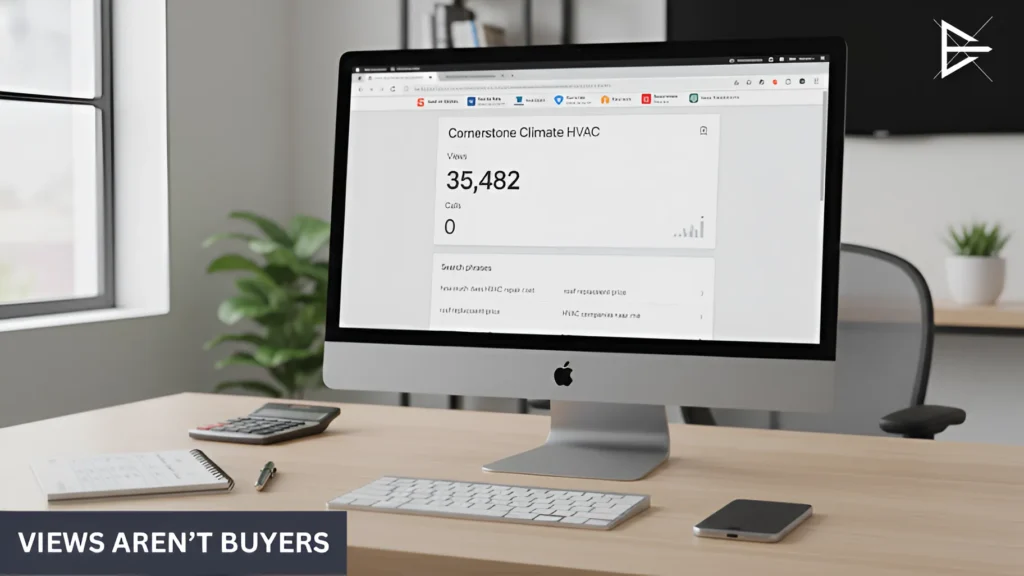
If your Google Business Profile gets views but no calls, it usually means people are checking you out but not feeling sure enough to move forward. Showing up in search is one thing. Getting picked is another.
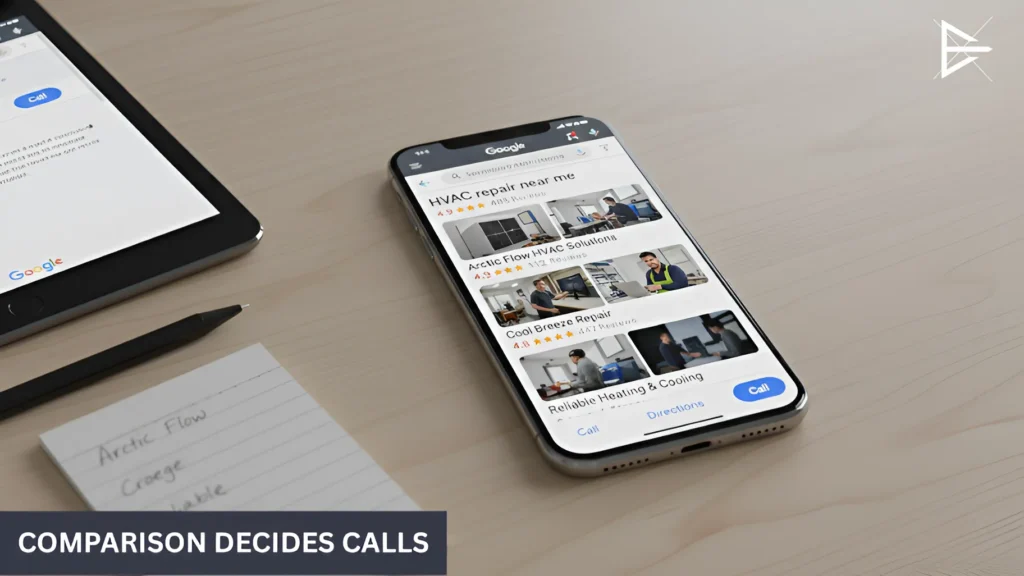
Most people don’t open one listing. They open three. They compare fast. If another business looks clearer, more active, or just more put together, that’s where the call goes. The issue isn’t always traffic. It’s what happens in those few seconds when someone is deciding who feels safer.
Do Google Business Profile views mean people want to hire me?
Not really. A view just means someone clicked. It doesn’t mean they were ready to buy. A lot of people are just researching, checking prices, or comparing options.
Some are verifying your hours. Some are saving you for later. Some are clicking every listing on the page. That still counts as a view. Real intent shows up when someone feels ready to solve a problem now, not when they’re just browsing.
How do I turn Google Business Profile views into calls?
You don’t fix it by chasing more views. You fix it by making the profile stronger. Clear services. Real photos. Recent reviews. Fast trust.
When someone lands on your listing, they should understand what you do best almost instantly. If they have to figure it out, they won’t. The easier you make that decision, the more likely they are to call instead of scrolling to the next option.
What makes someone choose one business over another on Google Maps?
It usually comes down to comparison. People open a few listings and scan quickly. They look at ratings, how recent the reviews are, and whether the business feels active.
Small differences matter. If your competitor has clearer wording or newer feedback, they can look stronger even if you’re close in rating. It’s rarely about being perfect. It’s about looking slightly more solid in the moment.
Can the wrong business category cause low calls?
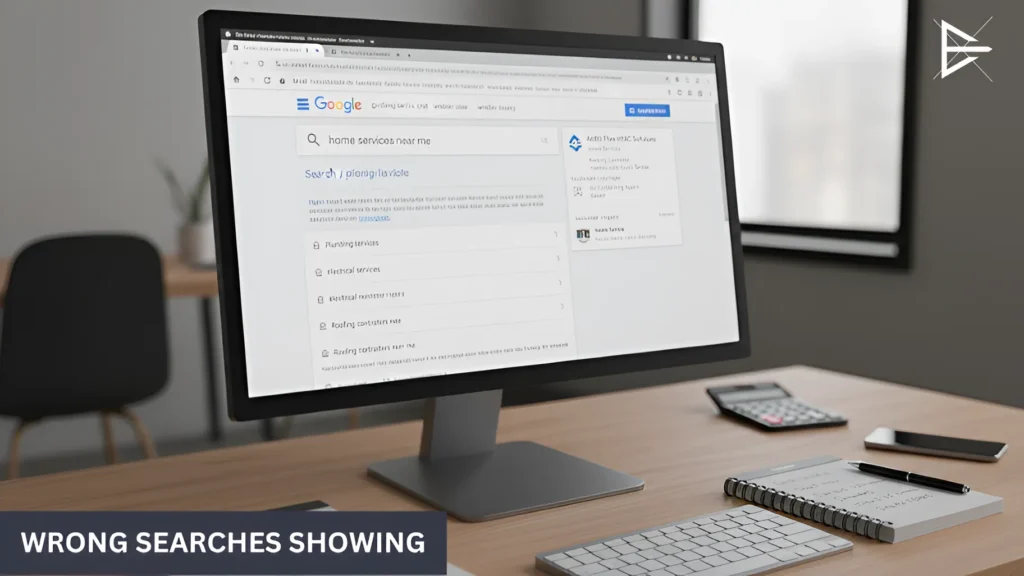
Yes, and this one gets missed a lot. If your main category is too broad or slightly off, Google may show you for searches that don’t really match what you want to sell.
That brings impressions but not serious buyers. When your category lines up tightly with your main service, the traffic changes. Fewer random clicks. More people who actually need what you do.
Do reviews really impact call volume?
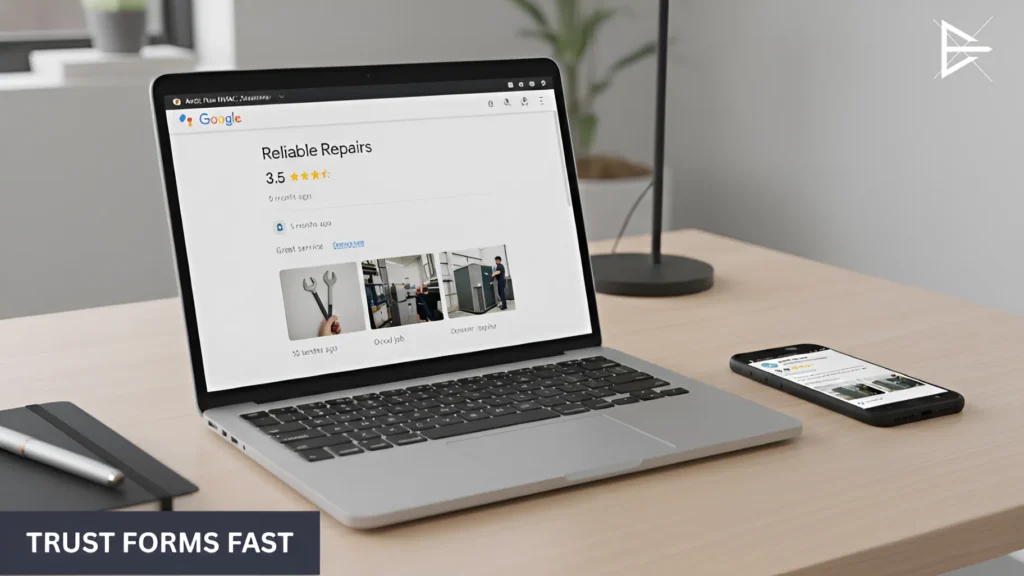
Yes. More than most owners think. Reviews are usually the first thing people look at. Not the description. Not the posts. The reviews.
But it’s not just the star rating. It’s how recent they are and what they say. A steady flow of real, specific reviews makes a business feel active. Long gaps or vague comments make people pause, even if the rating is high.
How important are photos on a Google Business Profile?
Photos matter because people don’t read much. They scan. Images are faster than words. If your photos look real and current, that builds confidence right away.
If they look random, outdated, or like stock images, trust drops quietly. No one says it out loud, but they feel it. Real job photos and real team images help people picture working with you.
Why does my competitor get more calls with similar ratings?
Because customers compare. They don’t look at you in isolation. They open your listing and the competitor’s at the same time.
Side by side, small differences stand out. Maybe their reviews are newer. Maybe their services are clearer. Maybe their profile just feels cleaner. Those small gaps are enough to shift the call.
Does posting regularly on Google Business Profile help conversions?
It does, but not in the way people think. Posting doesn’t magically create calls. What it does is show that your business is active.
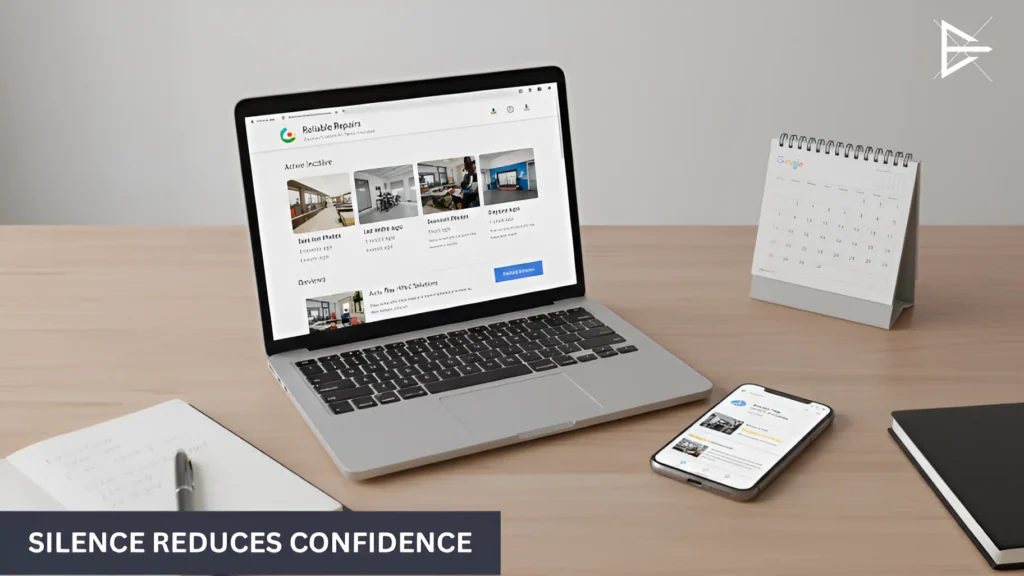
When someone scrolls and sees recent updates, it signals life. When the last activity was months ago, it feels quiet. Active profiles feel managed. Managed profiles feel safer.
Can broad service listings reduce conversion?
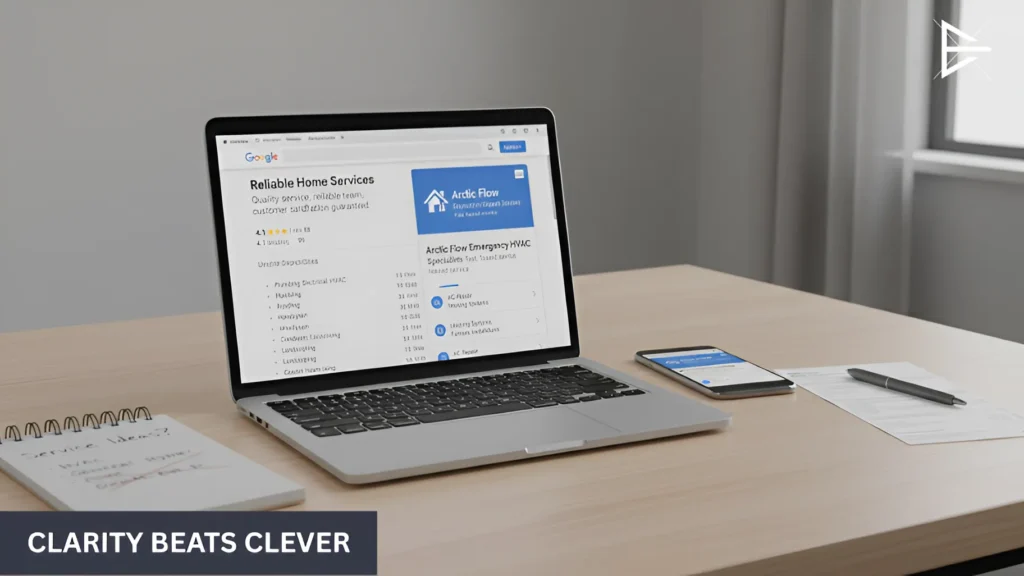
Yes. When you try to cover everything, you end up sounding like everyone. A long list of general services makes it harder for someone to understand what you’re really known for.
Customers move toward clarity. If another business clearly focuses on one thing while yours feels spread out, they look more confident. Focus builds trust faster than volume.
Should my website match my Google Business Profile messaging?
Yes. If someone clicks from your Google Business Profile to your website and it feels different, that hesitation shows up fast. Even if they can’t explain it, something feels off.
Your listing and your website should tell the same story. Same services. Same focus. Same tone. When both match, confidence builds. When they don’t, people slow down. And slowing down often means backing out.
How fast do people decide who to call on Google Maps?
Faster than most business owners expect. People don’t sit there analyzing every word. They open a few listings, scroll quickly, and choose.
This whole process can take less than a minute. That’s why clarity matters so much. If someone understands what you do and sees proof right away, you stay in the race. If not, they move on without much thought.
What are trust signals on a Google Business Profile?
Trust signals are the small details that make your business feel real and active. Recent reviews. Replies to customers. Clear service descriptions. Updated photos.
None of these things alone make the decision. But together, they shape how solid you look. When those signals are missing or outdated, doubt creeps in quietly. And doubt usually sends the call somewhere else.
Does inactivity hurt my Google Business Profile performance?
Yes, even if your ranking doesn’t drop. A profile that hasn’t been updated in months feels untouched. People notice that.
When another business shows recent activity, fresh photos, and new reviews, they look alive. Active businesses feel safer to call. Inactive ones feel uncertain, even if the services are good.
Why is my call-to-view ratio low?
A low call-to-view ratio usually means something isn’t lining up. Either the traffic coming in isn’t strong intent, or the profile isn’t convincing enough.
It’s not always about getting more views. Sometimes it’s about tightening the message and strengthening trust. When those two things improve, the gap between views and calls starts to close.
Can incorrect business details affect calls?
Yes, and it happens more than people think. If your phone number is outdated somewhere, your business name varies slightly, or your address shows up differently across listings, it weakens consistency.
Most customers won’t analyze this. They’ll just feel unsure. And when they feel unsure, they hesitate. Consistent, accurate details across platforms quietly build trust and support stronger local presence over time.
Should I focus on more views or better conversion?
More views won’t fix a weak profile. If your Google Business Profile already gets traffic but not calls, adding more traffic just increases the gap.
Conversion should come first. When your listing is clear, focused, and trust-building, then additional visibility actually turns into leads instead of just numbers.
What is the call-to-view gap?
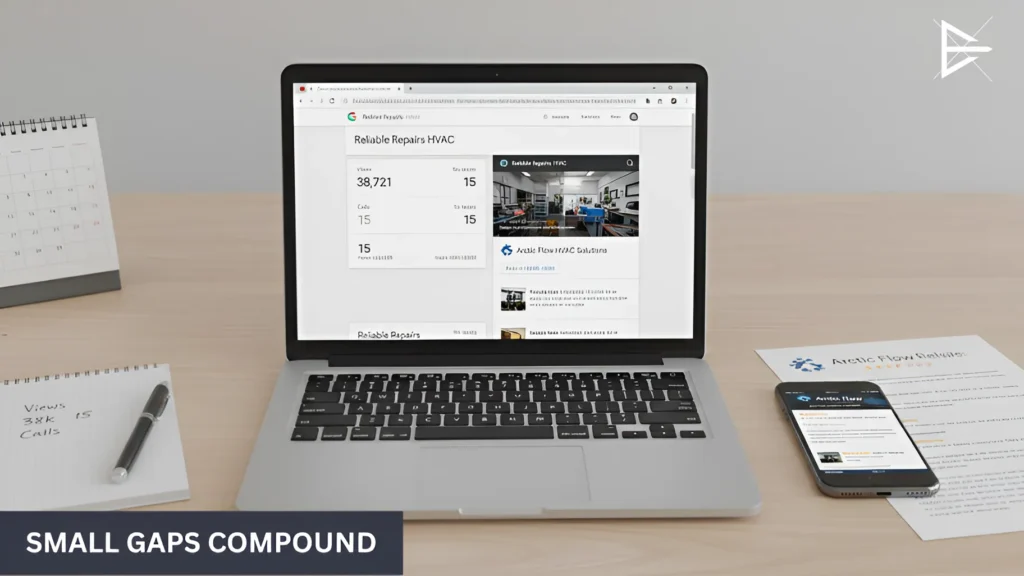
The call-to-view gap is the difference between how many people see your profile and how many actually contact you. It’s one of the simplest ways to measure performance.
A wide gap usually points to missed trust signals, unclear positioning, or weak alignment. When that gap narrows, you’re not just getting seen. You’re getting chosen.
How do I know if my Google Business Profile is underperforming?
If impressions stay steady but calls don’t increase, that’s a sign. Another sign is when competitors with similar rankings seem to get more action.
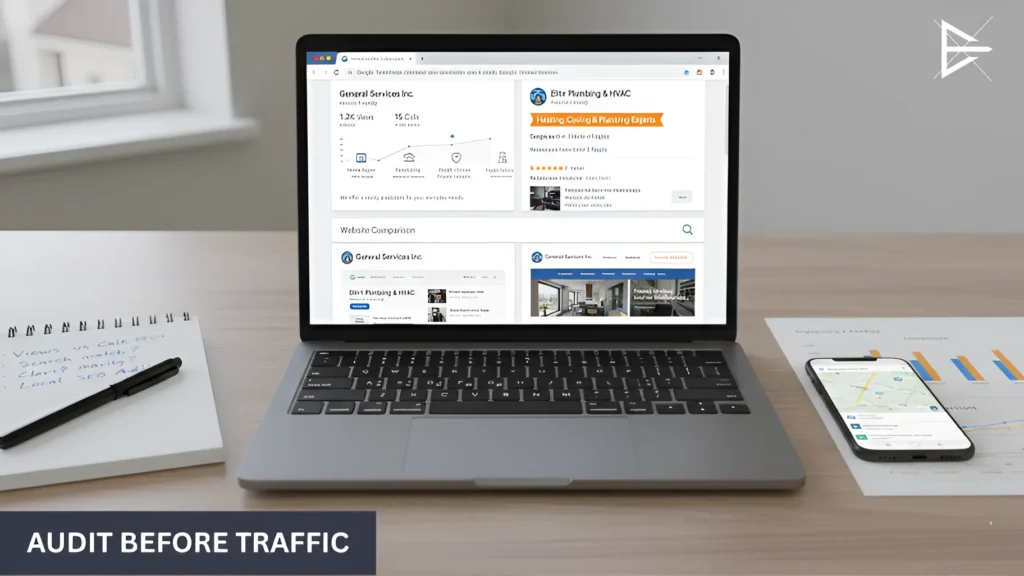
The easiest way to check is comparison. Open your profile next to the top two competitors and look at them honestly. The differences become clearer when viewed side by side.
When should I get help optimizing my Google Business Profile?
If you’ve adjusted small things and nothing changes, it may be time for a deeper review. Especially if your Google Business Profile gets views but no calls consistently.
An outside audit often spots gaps that are hard to see internally. Sometimes it’s not one big issue. It’s several small ones stacking up and quietly affecting conversion.