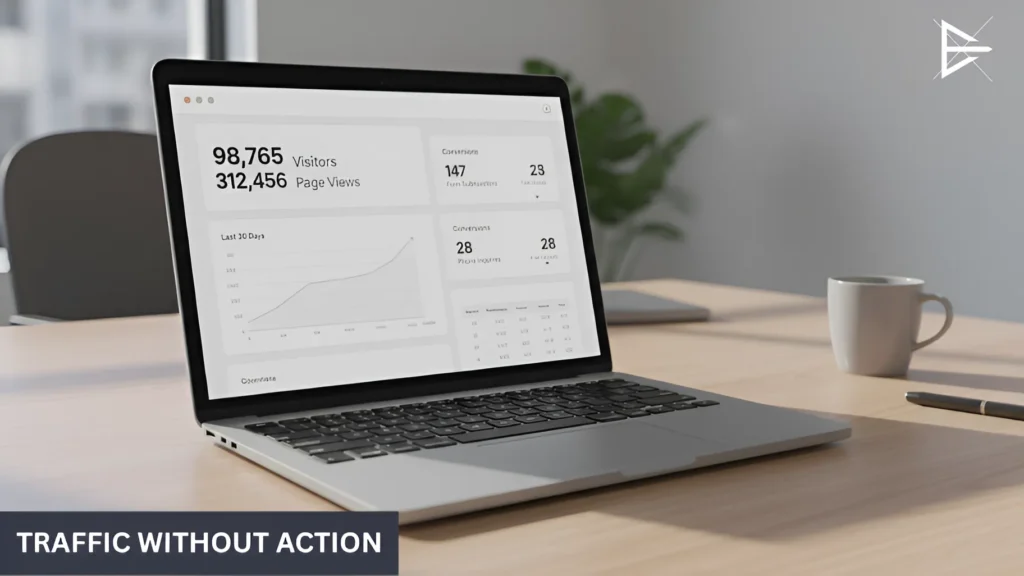
Why is my website traffic increasing but leads are not?
When traffic goes up, it usually means more people are finding your site. They might be clicking from Google, reading a post, or checking something quickly. That visit still counts, even if they were never planning to contact anyone.
Leads are different. A lead only happens when someone feels ready to reach out. If your site brings people in but does not help them understand what to do next, traffic can grow while nothing else changes.
Does high website traffic mean my marketing is working?
High traffic usually means your site is visible. People are seeing your pages and clicking through. That part is a good sign and shows something is working.
But marketing does not end at the click. If visitors leave without contacting you, the problem is often not traffic. It is how the site explains things or what it asks people to do next.
What is the difference between website traffic and leads?
Traffic is just visits. Anyone who lands on your site adds to that number, even if they leave right away. It tells you people showed up, nothing more.
Leads only happen when someone takes action. A call, a form, or a message means they decided to reach out. That decision is what makes leads matter more than traffic alone.
Can the wrong traffic cause low leads?
Yes, and it happens a lot. People can land on your site for reasons that have nothing to do with hiring or buying. They might be looking for general information or answers.
When those visitors realize the site is not what they need, they leave. In that case, more traffic just means more people passing through, not more leads.
How do I know if my traffic is the problem or my website is?
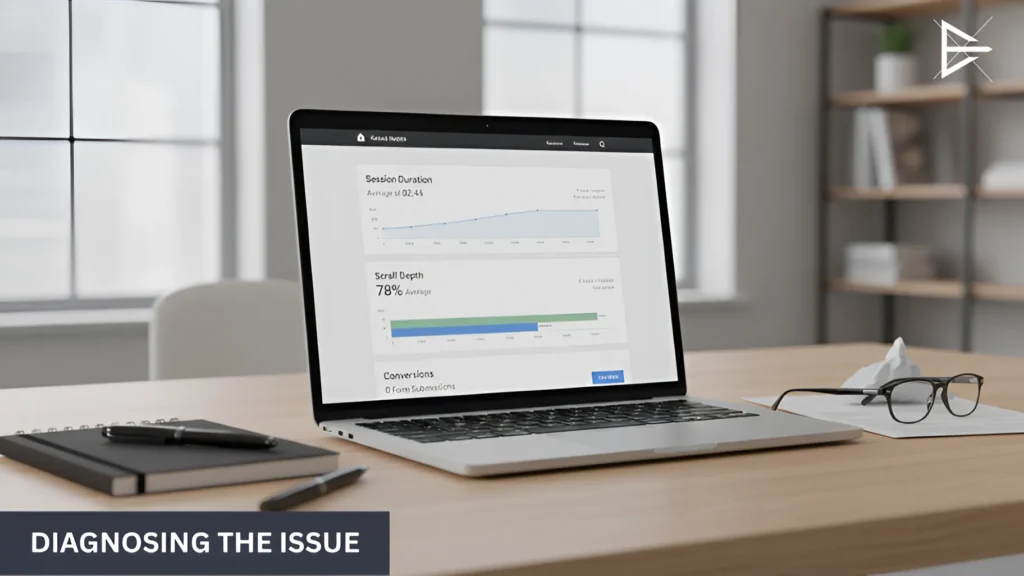
The answer usually shows up in behavior. If people leave almost right away, the traffic may not be a good fit. They clicked, looked, and moved on.
If people stay, scroll, and read but never reach out, the traffic is probably fine. That usually means the site itself is not helping them take the next step.
Why do visitors read my site but not contact me?
Most visitors are not trying to make a decision right away. They come in to understand something, double-check an idea, or see if a business might be a fit. Reading helps them do that, but it does not mean they are ready to talk to anyone yet.
In many cases, the site gives them enough to feel settled. They finish reading, feel informed, and move on. Nothing feels unfinished, so contacting you never feels necessary in that moment.
Does helpful content always generate leads?
Helpful content does what it is meant to do. It explains things clearly and answers questions people already have. That makes it useful, but it also creates a natural stopping point.
Once visitors feel they understand the topic, they often leave. If the content does not hint that help could still matter or that talking to someone might be useful, the visit ends there without turning into anything else.
Why do visitors leave after getting their answer?
Most people arrive on a page with one clear reason. They want an answer, confirmation, or a quick explanation. When they get it, they feel done.
If nothing on the page connects that answer to what comes next, leaving feels normal. From the visitor’s point of view, they did exactly what they came to do.
What makes a website feel hard to act on?
A website usually does not feel hard because of one big mistake. It feels hard because of several small things at once. The message may take effort to understand. The page may feel busy. The next step may not stand out.
When visitors have to slow down and think too much, they hesitate. And once hesitation starts, leaving becomes the easiest choice, even if they were interested at first.
How important is the first section of a page?
The top of a page does a lot of quiet work. It tells visitors if they are in the right place and if the page is worth their time.
Most people decide very quickly. If the first section does not make things clear, many visitors leave before scrolling, even when the rest of the page is solid.
Can a weak call to action affect leads?
Yes, it can affect leads more than most people realize. The call to action is the moment where a visitor decides whether to move forward or stop. Up until that point, they are only reading and thinking. That one small section is where the page asks for effort.
When that moment feels unclear, dull, or easy to ignore, people hesitate. They may still like the page, but nothing tells them that clicking is worth it. Even interested visitors can walk away simply because the page never clearly invited them to act.
Why do generic websites struggle to get leads?
Generic websites often sound safe and familiar. The wording feels polished, but it could belong to almost any business in the same space. Visitors read it and feel like they have seen it before.
When a site feels interchangeable, people do not feel confident choosing it. They keep comparing, opening new tabs, and telling themselves they will decide later. That hesitation usually ends with no contact at all.
Do I need more traffic to get more leads?
Not always. Many websites already get enough visitors to support more leads than they are seeing. The problem is usually not the number of people arriving on the site.
If visitors arrive and feel unsure what to do or why they should act, more traffic just repeats the same pattern. The site gets busier, but the outcome stays the same because nothing has changed in how people move through the page.
What is intent, and why does it matter?
Intent is the reason someone is visiting your site in the first place. Some visitors are just learning. Others are checking options. A smaller group is actively looking for help or a service.
Leads mostly come from that last group. When most traffic comes from people with low intent, results stay low even when visits increase. The traffic looks good, but the readiness is not there yet.
Why do people delay contacting a business online?
People delay when they feel unsure or not fully convinced. They may like what they see, but something still feels incomplete. That could be trust, timing, or simply not knowing what happens after they reach out.
If nothing explains why contacting you now matters, waiting feels safe. And once someone decides to wait, the moment usually passes. The page gets forgotten, even if the interest was real.
How many actions should a page ask visitors to take?
When a page asks visitors to do too many things, it creates hesitation. Each option forces a small decision, and those decisions add up quickly. Instead of acting, people pause and think about which option is best.
For many visitors, that pause is enough to stop them. When the next step is not obvious, leaving feels easier than choosing. Even interested visitors can walk away simply because the page asked too much of them at once.
Can small changes really improve lead conversion?
Yes, small changes can matter a lot. Many lead problems are not caused by one big issue, but by several small ones that stack together. Each one adds a little friction or doubt.
When those small issues are present, visitors feel it even if they cannot explain it. Removing just a few of them can change how a page feels and how comfortable people are taking action.
Why is it hard to see issues on my own website?
It is hard to spot problems because you already know what everything means. You understand the services, the wording, and the flow because you have seen it many times before.
New visitors do not have that context. They experience the site without background or assumptions. That difference makes it easy for issues to hide in plain sight when you look at the site every day.
When should I get help reviewing my website?
Many people reach this point after trying several changes without seeing results. Traffic may be growing, but leads feel stuck. Every adjustment starts to feel like a guess.
That is usually a sign that effort is not the issue. Clarity is. A fresh set of eyes can spot things that are easy to miss when you are too close to the site.
What is the first step to fixing the traffic-to-leads gap?
The first step is understanding what visitors actually experience. Not what the site is meant to say, but what it feels like to land on it for the first time.
Once that picture becomes clear, the gap between traffic and leads stops feeling confusing. It becomes easier to see why people leave and what is quietly holding them back.