Why This Matters for Your Business

Local SEO vs SEO: How to Know Which One Your Business Really Needs

See how Local SEO and Regular SEO impact your visibility and which one helps you grow faster.


Quick Answer: How to Know Which SEO You Need

Start by thinking about where your customers actually come from. If most of them live in your city or nearby, then Local SEO is the one that helps you show up in Google Maps and local searches.

But if your business reaches people outside your area or anywhere online Regular SEO usually makes more sense because it focuses on broader searches.

What You’ll Learn in This Guide

What Regular SEO Is (and How It Works)

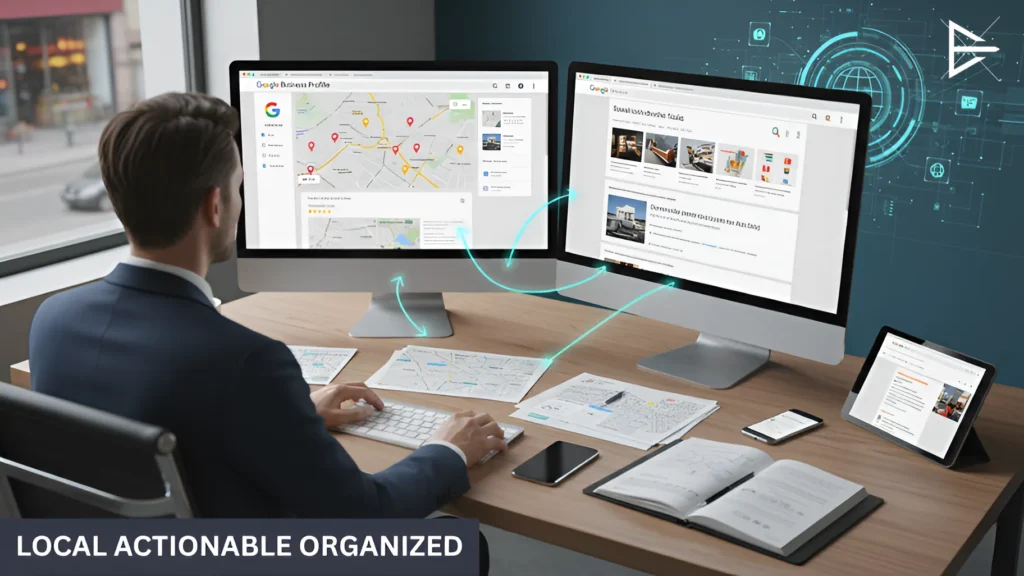
Workplace showing the balance between Local SEO (Google Maps, customer engagement) and Regular SEO (broad search results) for comprehensive business growth.

Regular SEO focuses on helping your website show up in searches that aren’t tied to any specific city or location. Think of it as the work that helps people find you when they’re looking for a product, service, or answer, no matter where they are.

It usually involves improving three main areas of your site:

● The quality and usefulness of your content
● The trust signals pointing to your site, like backlinks
● The technical setup that helps Google understand your pages

When these pieces are in good shape, your pages have a better chance of ranking for broad, topic-based keywords rather than local searches.

What Local SEO Is (and Why It Matters for Local Visibility)

Cafe setting with customers interacting with their smartphones and a Google Business Profile displayed on a digital screen

Local SEO is the type of SEO that helps people in your area find your business. When someone nearby searches for a service and wants a local option, this is what helps you show up, especially in Google’s map results.

It focuses on a few practical things that tell Google, “Yes, this business serves this location,” such as:

● Updating and maintaining your Google Business Profile
● Keeping your business name, address, and phone number consistent across the web
● Getting reviews from real customers
● Using keywords that mention your city or the areas you serve

Local SEO usually matters most for businesses that rely on customers who live or work close by, like:

● Home service companies
● Medical or dental practices
● Restaurants and retail locations
● Real estate professionals
● Any business that serves a specific city or service area

Local SEO vs Regular SEO: The Key Differences

Google Business Profile interface on a computer screen, showing customer reviews and location details to optimize Local SEO.

Local SEO and Regular SEO do very different jobs, even though both fall under the same “search optimization” umbrella. Here’s a simple way to look at how they differ without overcomplicating things.

1. Ranking Goals

Local SEO is built to help you show up in Google’s map results and local listings.

● Regular SEO focuses on helping your website show up in the main search results for broader topics.

2. Keyword Strategy

● Local SEO works with location-based searches, like “dentist in Ankeny.”

● Regular SEO focuses on general keywords that don’t mention a place, like “how to prevent tooth pain.”

3. Audience Targeting

● Local SEO reaches people who are close enough to visit you or book a service.

● Regular SEO reaches people from anywhere who are searching for information, products, or services.

4. What Helps You Rank

● Local SEO pays attention to things like reviews, local listings, your Google Business Profile, and how close you are to the searcher.

● Regular SEO leans more on strong content, links from other websites, and whether your site is technically easy for Google to crawl.

5. Tools & Signals Used

Local SEO relies heavily on Google Business Profile, local citations, and location signals.

● Regular SEO depends more on your website content, backlinks, and technical improvements.

How to Know Which SEO You Actually Need

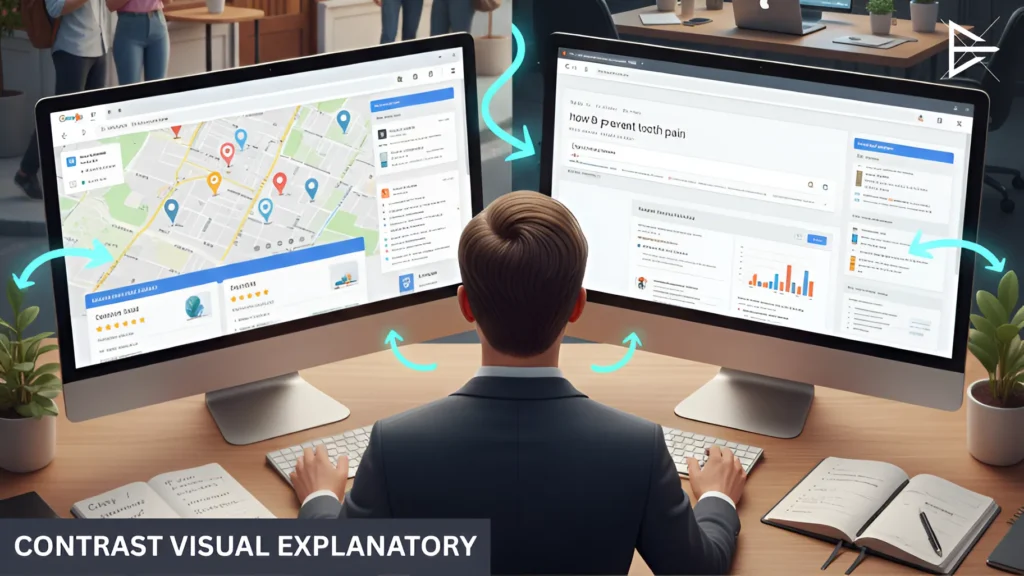
A digital workspace showing a Google Business Profile with map results on one monitor and SEO analysis with broader search results on the other.

The easiest way to choose between Local SEO and Regular SEO is to look at how your business works. Here are a few simple questions that can guide you:

Think about your customers:

● Do your customers come from your city or nearby areas?
If yes, you’ll need Local SEO.

● Do you only serve certain towns or neighborhoods?
Then Local SEO is the right fit.

● Do people need to visit your place or book a service in person?
Local SEO will help them find you faster.

Now think about your reach:

● Can anyone buy from you, no matter where they live?
That points to Regular SEO.

● Are your main competitors ranking in many places, not just one city?
You’ll likely need Regular SEO too.

When You Need BOTH Local SEO and Regular SEO

Visual comparison of Local SEO (Google Maps) and Regular SEO (broader search results), showing how different strategies apply to businesses.

Some businesses don’t fit into just one type of SEO. In these cases, using both can help you reach more people. Here are a few simple examples:

● You have more than one location.

Each location needs Local SEO for its own city. Your main site still needs Regular SEO to reach people who aren’t close to any branch.

● You work in one area but your content reaches farther.

For example, a local shop or clinic that also publishes guides or articles that help people everywhere.

● You serve a local community and sell online at the same time.

Local SEO brings nearby customers, while Regular SEO helps your online products show up for people in other places.

Common Mistakes People Make When Choosing SEO

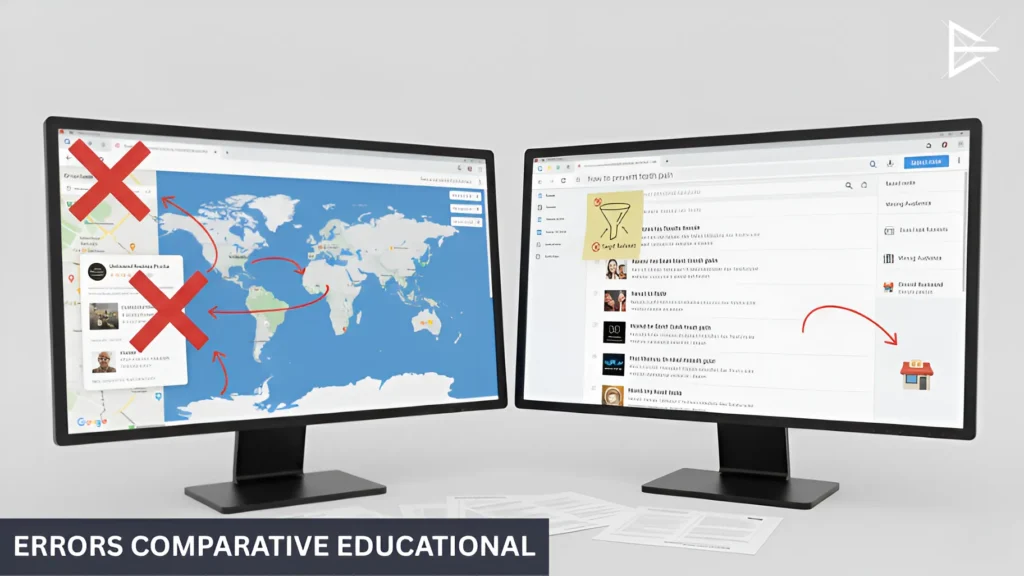
Side-by-side comparison of Local SEO and Regular SEO mistakes, featuring incorrect map results and irrelevant national keywords.

People often get mixed up when deciding between Local SEO and Regular SEO. Here are a few mistakes that happen a lot:

● Thinking Regular SEO will make them show up in Google Maps.
Maps results come from Local SEO, not the regular kind.

● Not setting up or updating their Google Business Profile.
If you want local customers, this profile matters a lot.

● Going after big national keywords while only serving one city.
This usually brings in the wrong visitors and slows things down.

● Choosing Local SEO even though their customers aren’t tied to one place.
If location doesn’t matter, Local SEO won’t help much.

How I Can Help with Your SEO Needs

A professional workspace displaying an SEO dashboard with global and local SEO data, showing goal alignment and hybrid strategy for SEO performance.

If you’re still unsure which type of SEO fits your business, I can help you sort it out in a straightforward way. I look at what your business does, who you want to reach, and what type of growth you’re aiming for.

Here’s what I can help you with:

● figuring out where your customers actually come from
● seeing whether your goals match Local SEO, Regular SEO, or a mix of both
● putting together a simple plan that fits how your business works
● focusing on steps that bring the right visitors, not just more visitors

The Fastest Way to Choose the Right Approach

Choosing between Local SEO and Regular SEO becomes easier once you look at how your business actually works. If your customers come from your city or nearby areas, Local SEO is usually the best fit because it helps you show up in local searches and on the map.

If you reach people from different places, or even anywhere online Regular SEO is the one that can help you show up for broader searches.

Local SEO vs SEO: Frequently Asked Questions

What is the main difference between Local SEO and Regular SEO?

Local SEO focuses on helping people in your area find your business. It is what helps you show up in local results and on Google Maps when someone searches for a service near them.

Regular SEO is not tied to any one place. It helps your website show up for broader searches so people from any location can find your content, products, or services.

How do I know if my business needs Local SEO?

A good way to tell is to look at where your customers come from. If most of them live in your city or nearby towns, Local SEO is usually the best place to start.

If you rely on visits, appointments, or local service calls, Local SEO helps you show up when people close to you search for what you offer.

When is Regular SEO the better choice?

Regular SEO is a better fit if your customers are not limited to one area. If you sell online, offer digital services, or attract visitors from many locations, Regular SEO helps you reach them.

It is also useful if you want to grow your brand and be found for broad topics, guides, or resources that people might search for from anywhere.

Can a business use both Local SEO and Regular SEO?

Yes, many businesses do well with a mix of both. Local SEO brings in people who live or work near you and are ready to contact a local provider.

Regular SEO helps you reach a wider audience with content and services that are not limited by location. Together, they can support both local and long term growth.

Does Local SEO help me show up in Google Maps?

Yes. Google Maps visibility is closely tied to Local SEO. When someone searches for a business or service near them, Local SEO signals help decide who appears in the map results.

Improving your Google Business Profile, reviews, and local consistency can make it easier for your business to show up in the local map pack.

Does Regular SEO affect my map rankings?

Regular SEO mainly helps your website pages show up in the organic results, not in Google Maps. Map rankings rely more on local signals than on traditional website optimization.

If your main goal is to appear in Maps, you will want to focus on Local SEO tasks like Google Business Profile, citations, and local reviews.

What types of businesses benefit most from Local SEO?

Local SEO is especially helpful for businesses that rely on nearby customers. This includes home service companies, restaurants, medical and dental practices, salons, and real estate professionals.

Any business that serves a specific city or service area and depends on calls, walk ins, or local bookings should make Local SEO a priority.

What types of businesses benefit most from Regular SEO?

Regular SEO works well for businesses that are not limited to one city. Examples include online stores, digital services, online education, and content driven sites.

It is also helpful for brands that want to build authority on a topic and attract visitors from many regions through helpful articles, guides, or product pages.

Do I need a Google Business Profile for Local SEO?

Yes. A Google Business Profile is one of the most important pieces of Local SEO. It helps your business appear in local search results and on Google Maps.

Keeping your profile updated with correct information, photos, and regular activity can improve trust and make it easier for local customers to contact you.

What are the main ranking factors for Local SEO?

Local SEO looks at signals that show where you are and how well you serve local customers. This includes your Google Business Profile, reviews, local citations, and your distance from the searcher.

Good local content, accurate contact details, and a strong reputation in your area all help improve your chances of appearing in local results.

What are the main ranking factors for Regular SEO?

Regular SEO focuses more on your website content and how useful it is. Google looks at how clearly you answer search questions, how well your pages are structured, and how easy they are to use.

Backlinks from trusted sites, a fast and mobile friendly website, and solid technical setup also play a big role in your ability to rank for broad keywords.

Can I rank in local searches without a physical address?

Yes, service area businesses can still rank in local searches even if they do not show a storefront address. You can set up your service areas inside your Google Business Profile.

This tells Google which locations you cover so that your business can still appear for people searching in those areas.

How long does Local SEO take to show results?

Many businesses see small changes within a few weeks, especially if they had little or no local setup before. You might notice more views, calls, or direction requests as your profile improves.

Bigger gains usually appear over a few months as reviews grow, information stays consistent, and you keep your local presence active.

How long does Regular SEO take to work?

Regular SEO often takes longer because it deals with more competition and depends heavily on content and backlinks. It is common to see clearer results after three to six months of steady work.

The payoff is that good Regular SEO can keep bringing in visitors for a long time after the initial work is done.

Will adding my city to my keywords always help?

Adding a city to your keywords can help if you are trying to reach local customers. It makes it clearer that you serve that specific area.

However, if your audience is not limited to one place, using city names can narrow your reach too much. In that case, broader keywords are usually better.

Is Local SEO cheaper than Regular SEO?

Local SEO can be more cost effective because you are only competing with other businesses in your area, not with every site in your industry.

Regular SEO usually takes more content and link building, since you are reaching a bigger market. The investment can be higher, but so can the long term return.

Can Local SEO help me get more calls and walk ins?

Yes. When you show up in Google Maps and local results, it becomes much easier for people to call you, get directions, or visit your website.

Strong Local SEO can turn local searches into real world actions, like bookings, store visits, and service requests.

What if my business competes with national brands?

If you compete with national brands, Regular SEO can help by letting you focus on specific topics, questions, or niches where you can stand out.

Local SEO also gives you an advantage in your own area. Even big brands can struggle to beat a strong local presence in map and local results.

Should a small business do its own SEO or hire help?

A small business can start by handling simple SEO tasks on its own, such as setting up a Google Business Profile and fixing basic website issues.

As goals grow or competition increases, getting help from someone who understands both Local and Regular SEO can save time and prevent costly mistakes.

How do I decide which SEO plan is right for me?

Begin by looking at where your customers live and how they find you now. If most are local, Local SEO is likely your best first step. If your reach is wider, Regular SEO may be a better fit.

If your business serves both local and non local customers, you may need a mix of both. A simple review of your goals and current traffic can make the next step much clearer.


About the Author

Harvie Ken Colonia

Hi, I’m Harvie!

I’ve been working in SEO and web management since 2019, and along the way, I’ve learned how powerful the right SEO strategy can be for helping businesses show up and grow online. I’ve spent years figuring out what works, whether it’s Local SEO to get more local customers or Regular SEO to reach people farther out.

I understand the frustration of feeling invisible online, or trying to figure out how SEO works for your specific business. That’s why I focus on practical strategies that help businesses like yours improve their online presence, reach the right people, and see real results.

If you’re ready to grow your business and get found by more customers, let’s talk!