How Your Online Presence Works Together

How Your Website, Google Profile, Social Media, and Branding Work Together

See how each part of your online presence plays a role in helping customers find you and feel confident reaching out.


The Short Answer: How Everything Works Together

Your website, GBP social media, and branding are meant to support each other, not compete for attention.

Your website explains what you do and why it matters, your Google profile helps people find and trust you, and social media keeps your business familiar between searches. Branding makes sure all of it feels connected, so nothing looks out of place or confusing.

What You’ll Learn in This Guide

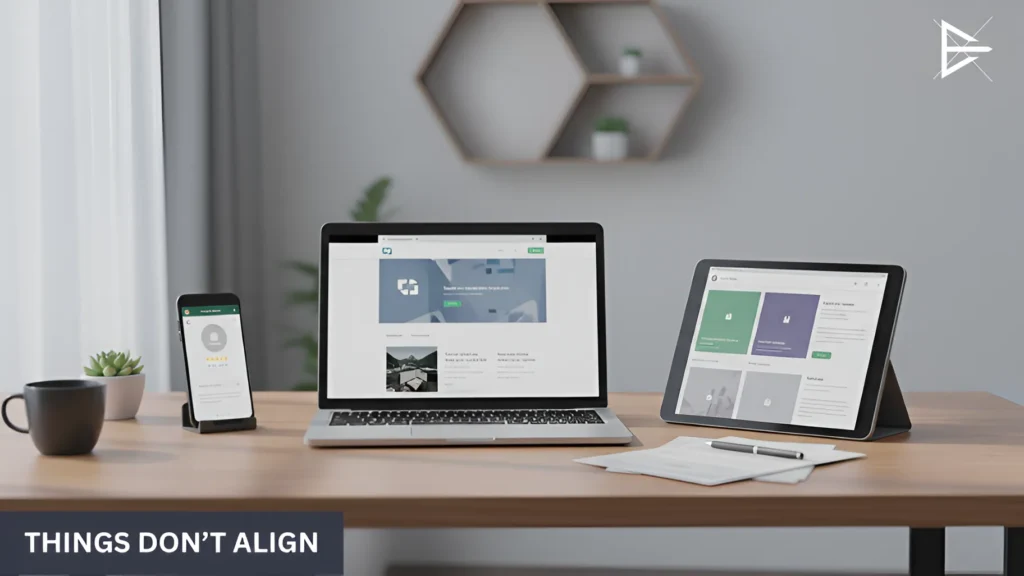
Why Your Online Presence Often Feels Disconnected

Website and online profiles displayed together showing slight inconsistencies in messaging

Most businesses do not plan for their online presence to feel messy. It usually happens little by little. A website gets updated when something changes.

A Google profile is edited to stay visible. Social media posts go out when there is time. Each platform gets attention, just not at the same time or with the same message in mind. Over time, things stop matching, even though everything still looks “fine” on the surface.

Here are some common signs this is happening:

● Your website and Google profile do not fully match

A customer might read one set of services on your website, then see something slightly different on your Google Business Profile. Maybe a service is missing, worded differently, or no longer offered. Even small differences can make people pause and wonder which one is correct.

● Your social media posts feel separate from your business

You may be posting regularly, but the posts do not clearly explain what you do or where someone should go next. People scroll, like, or follow, but they are not guided back to your website or services, so the attention stops there.

● Your branding changes depending on where someone finds you

Your website might feel professional, while social media sounds more casual. Colors, logos, or messaging may shift from one platform to another. None of this is wrong on its own, but it makes your business harder to recognize and remember.

● There is no clear next step for customers

One place tells people to call. Another suggests sending a message. Another says nothing at all. When people are unsure what to do next, many will simply leave instead of guessing.

● People show interest, but very few reach out

This usually means customers are confused, not uninterested. When things do not line up clearly, people hesitate. And hesitation often leads to inaction.

Think of Your Online Presence as One System, Not Separate Tools

Website, Google profile, and social media shown together as a connected online system

Most customers do not care where they find you first. They are not thinking about platforms. They are trying to answer a few basic questions: Is this business real? Do they offer what I need? Can I trust them? Your website, Google profile, and social media all play a part in answering those questions, whether you plan for it or not.

When you look at your online presence as one system, a few things start to make more sense:

● People usually see more than one part of your business before reaching out

Someone might find you on Google, click through to your website, and later check your social media. They are not comparing platforms. They are checking if everything feels consistent and believable.

● Each platform does a different job, but they should point in the same direction

Your website explains what you do. Your Google Business Profile helps people find you and trust that you are legit. Social media shows that you are active and present. None of these should feel disconnected from the others.

● Clarity matters more than being everywhere

It is better to have a clear message across a few places than mixed messages across many. When people understand you quickly, they are more likely to keep going.

● The easier it feels, the more likely people are to take action

When someone does not have to stop and think about what to do next, they are more comfortable reaching out, calling, or filling out a form.

● Small improvements add up when everything works together

A clearer service description, a matching message, or a consistent tone may seem minor, but together they make your business easier to choose.

Your Website: The Central Hub

Business website displayed on a laptop as the central place customers review before contacting

Out of everything you use online, your website is the place people rely on the most when they are serious.

Social media might catch their eye, and search results might help them find you, but when someone wants real answers, they usually end up on your website. This is where they slow down and decide if your business is worth contacting.

A good website handles a few important things:

● It clearly shows what you actually do

When someone lands on your site, they should not have to guess. They should know what services you offer, who those services are for, and whether you can help with their problem. If this is unclear or buried, people leave even if they were interested.

● It lines up with what people saw before they clicked

If someone comes from your Google Business Profile or from social media, your website should feel familiar right away. Same services, same message, same general feel. When it matches, people relax. When it does not, they start doubting.

● It answers the questions people are already thinking about

Visitors often want to know things like where you operate, how the process works, what the next step is, or what kind of results to expect. A strong website answers these questions without making people hunt for them.

● It makes the next step obvious

People should not have to wonder what to do next. Whether it is calling, booking, or filling out a form, the action should be easy to spot and easy to understand. When it is clear, more people follow through.

● It is where people finally decide

Many people discover your business elsewhere, but most decisions still happen on your website. This is where interest turns into calls, messages, or bookings.

Your Google Profile: Visibility and Trust at the Search Level

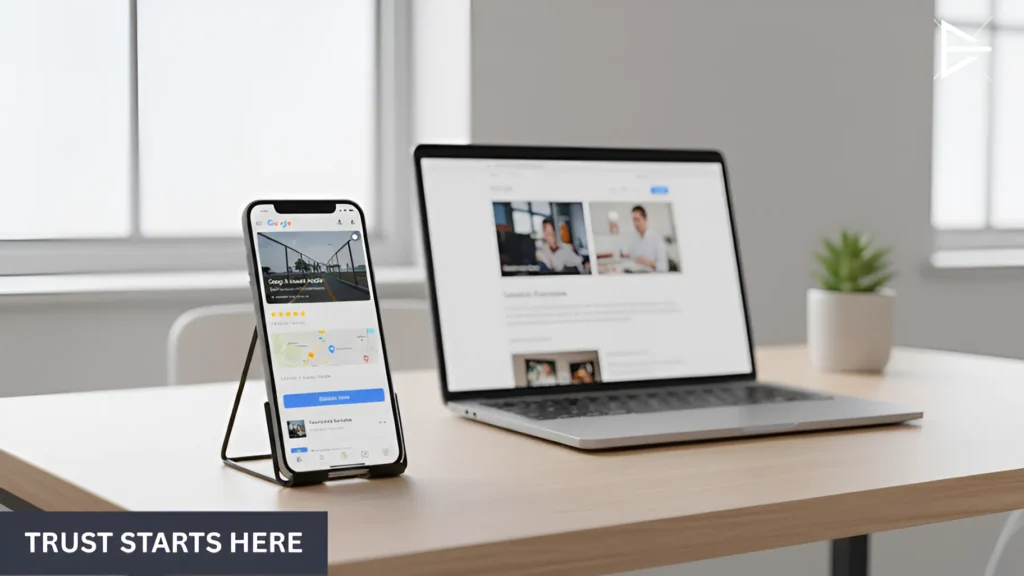
Google Business Profile viewed on a phone next to a business website on a desk

For a lot of people, your Google profile is your first impression. Before they visit your website or look at your social media, they search and scan what shows up. In a few seconds, they decide if your business looks legit, nearby, and worth clicking on.

That is why your Google Business Profile matters more than many businesses realize.

Your Google profile helps in a few important ways:

● It puts your business in front of people who are already looking

When someone searches for a service you offer, your profile shows up while they are actively trying to solve a problem. This is not casual scrolling. If your profile is missing details or looks outdated, people often skip right past it.

● It answers quick questions before anyone clicks your website

Many people check hours, photos, reviews, and services directly on your profile. If something looks off, unclear, or incomplete, they may never visit your site at all. Clear information builds confidence early.

● It helps people decide if they trust you

Reviews, photos, and how active your profile looks all send signals. A profile that looks cared for makes a business feel more reliable. One that looks neglected does the opposite, even if the business itself is solid.

● It needs to match what people see on your website

When someone clicks through, they expect the same services, same wording, and same overall feel. If things do not line up, people hesitate and start questioning which information is correct.

● It plays a big role in local decisions

Location details, service areas, and reviews help people decide if you are the right choice nearby. A clear, accurate profile helps you show up for the right searches and the right customers.

Social Media: Visibility, Familiarity, and Reinforcement

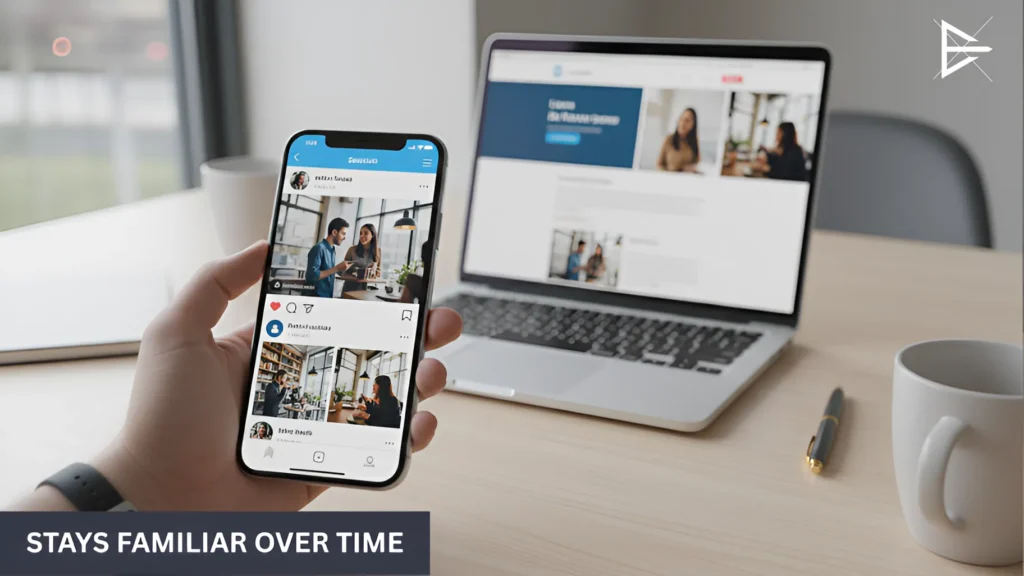
Social media feed viewed on a phone alongside a business website on a laptop

Most people do not go on social media looking to hire a business right away. They go there to scroll, check updates, or pass time. When they look up a business on social media, it is usually because they already saw the name somewhere else and want a quick sense of what that business is like.

Social media helps in a few simple but important ways:

● It keeps your business from being forgotten

When people see your posts every so often, your name stays in their head. They may not need you today, but when they do, your business feels familiar instead of new.

● It reassures people that you are active

A page with recent posts feels alive. A page that has not been updated in months can make people wonder if the business is still paying attention. This small check matters more than many businesses realize.

● It confirms what people already learned elsewhere

After visiting your website or finding you on Google, people often glance at social media to see if everything lines up. When the message and tone match, it feels reassuring. When it does not, it creates doubt.

● It shows the human side of your business

Social media gives people a sense of how you communicate and what kind of business you run. This can make reaching out feel less intimidating, especially for first-time customers.

● It should guide people back to the right place

Social media works best when it points people back to your website, your services, or a clear next step. On its own, it rarely closes the deal, but it plays a strong supporting role.

Branding: The Consistency That Connects Everything

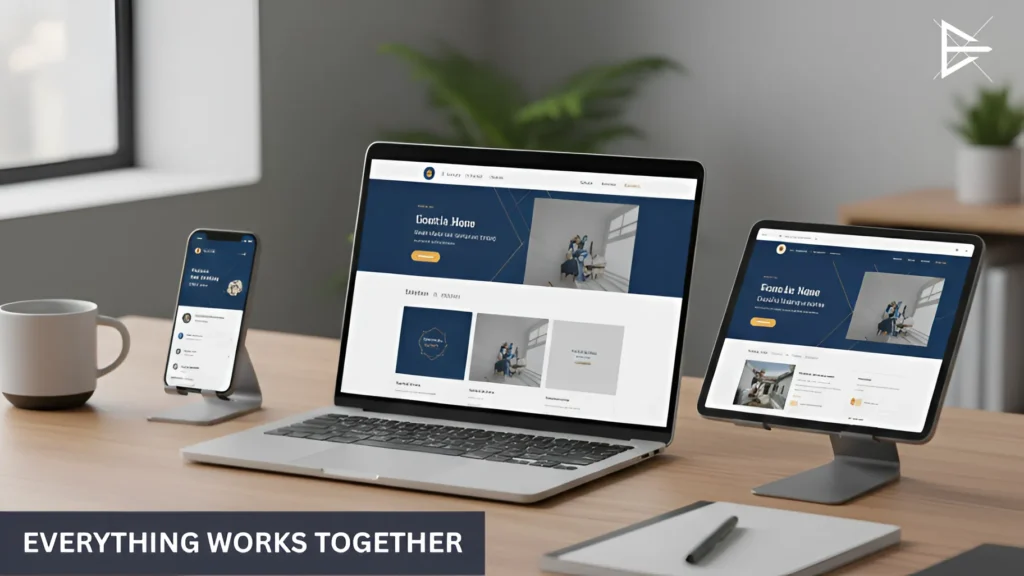
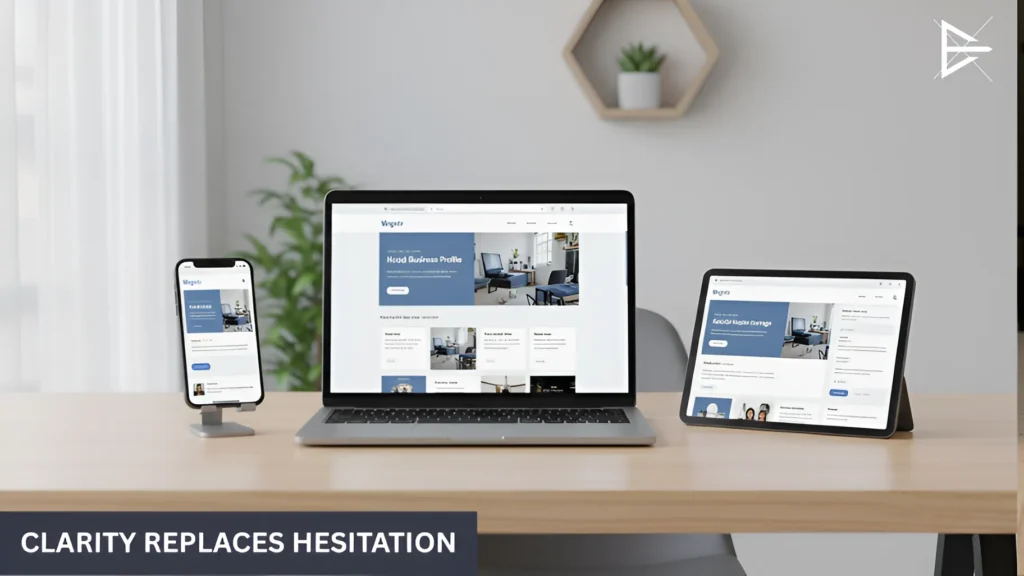
Business website displayed consistently across desktop, tablet, and mobile devices

Branding is what makes all the pieces feel like they belong together. Most people will never say, “I like their branding.” What they notice instead is whether things feel familiar or confusing. When your business looks and sounds the same wherever someone finds it, people feel more at ease without really thinking about why.

Good branding shows up in small, everyday ways:

● People quickly recognize that it’s the same business

When your website, social pages, and Google listing all look and sound similar, people do not have to double-check names or details. They just know they are in the right place.

● Your message feels easier to understand

Saying the same things in the same way helps people grasp what you do faster. When wording changes too much, people start guessing or filling in the gaps themselves.

● Your business feels more put together

Consistency gives the impression that you pay attention to details. Even if someone cannot explain it, they often trust businesses that feel organized and steady.

● Moving between platforms feels natural

When nothing feels out of place, people are more comfortable going from Google to your website, or from your website to social media. Each step feels familiar instead of new.

● Deciding to reach out feels less risky

When everything lines up, people spend less time questioning and more time deciding. That comfort plays a big role in whether they contact you or keep looking.

What Happens When Everything Is Aligned

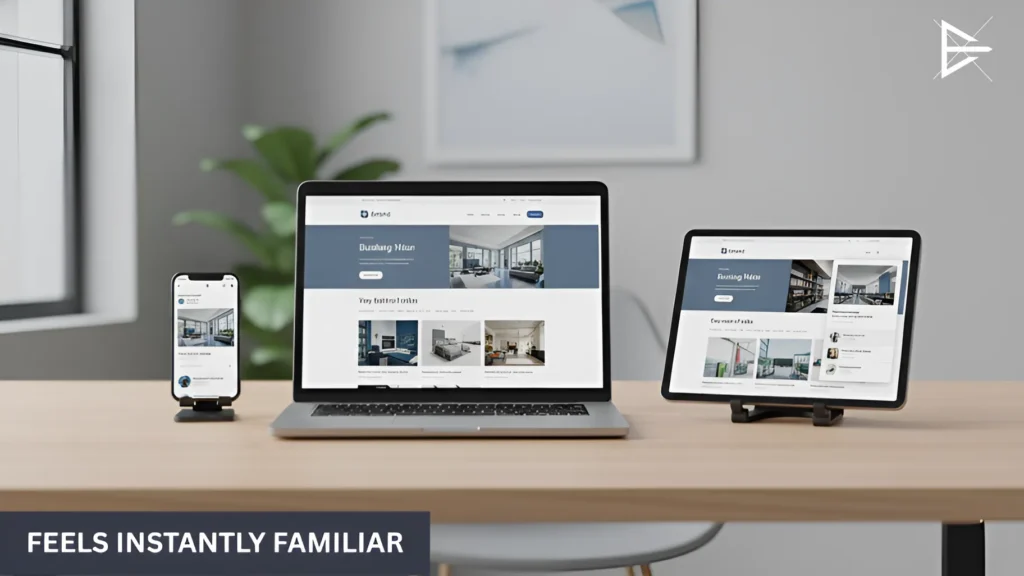
Laptop, tablet, and phone showing a consistent business website and profiles across platforms

When everything lines up, the difference is noticeable almost right away. Not in a flashy way, but in how smoothly things start to work. Fewer questions, fewer hesitations, and fewer people dropping off for reasons you cannot explain.

Here’s what businesses usually notice:

● People seem to “get it” faster

Visitors do not bounce around trying to figure out what you do. They move from one place to another and everything makes sense. The story stays the same no matter where they start.

● There’s less second-guessing from customers

When your message looks and sounds consistent, people stop wondering if they are missing something. They feel more confident that they understand your business.

● More conversations actually start

Alignment does not create interest out of thin air, but it removes the confusion that stops people from reaching out. When things feel clear, more visitors turn into calls, messages, or form submissions.

● Decisions feel easier on the customer’s side

People hesitate when something feels off. When nothing feels off, they move forward more naturally. That comfort often matters more than price or features.

How I Help Businesses Align Their Website, Google Profile, and Social Media

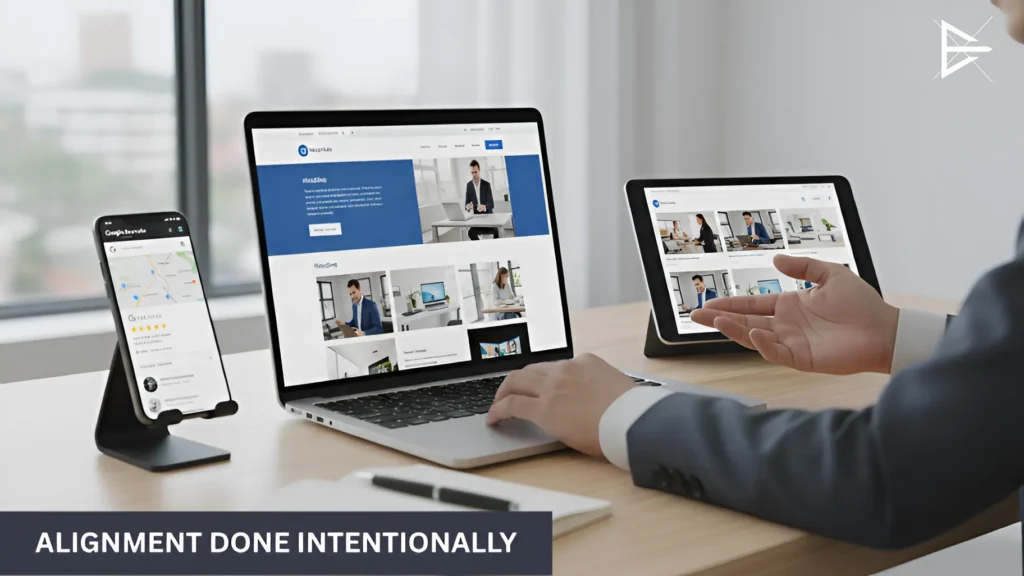
Professional reviewing a website, Google profile, and social media together to align a business’s online presence

Most businesses I talk to already have the main pieces set up. There’s a website, a Google Business Profile, and at least one social media page. The issue is not that anything is missing. It’s that no one has ever stopped to look at how all of it feels when you see it as a customer.

That’s the part I focus on.

When I help businesses get things aligned, this is usually what I’m doing:

● I look at the business the same way a customer would

I start with how someone might find the business, what they see first, and where they’re likely to click next. This makes it easier to spot things that feel unclear or slightly off.

● I check if the same services are being described the same way

Often the website says one thing, the Google profile says another, and social media says something else. Even small differences can confuse people, so I help clean that up.

● I pay attention to how everything sounds and feels

A business should feel like the same place no matter where someone lands. If the tone changes too much from one platform to another, it can make people hesitate without knowing why.

● I look for moments where people might get stuck

This could be a missing call to action, unclear contact info, or a page that doesn’t really guide someone forward. Fixing these small things often makes a big difference.

● I help keep things from slowly drifting out of sync

Over time, updates happen here and there. I help make sure those updates don’t pull the online presence in different directions.

Final Thoughts: Making Your Online Presence Work as One

Most businesses don’t need more platforms. They already have enough. What usually causes problems is that everything works separately instead of together. When your website, Google profile, social media, and branding are aligned, things feel simpler for both you and your customers.

People understand your business faster. They don’t have to second-guess what you offer or wonder if they’re in the right place. Each step makes sense, from finding you to deciding to reach out. That clarity alone removes a lot of friction.

If your online presence feels harder to manage than it should, that’s often a sign that alignment is missing, not effort. Stepping back and looking at how everything connects can do more for your results than adding something new.

Frequently Asked Questions

Do my website, Google profile, and social media really need to work together?

Yes. Most customers do not interact with just one platform before deciding. They might find you through search, visit your website, and then check social media to see if your business feels real and active. When those pieces line up, the decision feels easier.

When they don’t work together, small inconsistencies slow people down. Even if nothing is “wrong,” confusion creates hesitation, and hesitation often leads to people choosing another business instead.

What happens if my website and Google profile don’t match?

When details don’t match, people start questioning which information is correct. That doubt usually shows up before they ever contact you, and most people won’t ask for clarification. They’ll just move on.

Matching details builds quiet trust. When someone clicks from your Google Business Profile to your website and sees the same services and messaging, it confirms they’re in the right place.

Is my website more important than social media?

In most cases, yes. Social media helps people become familiar with your business, but your website is where they usually decide whether to reach out.

Your website is where people slow down, read, and look for answers. If the website isn’t clear, social media attention rarely turns into real inquiries.

How does my Google Business Profile help my business?

Your Google profile puts your business in front of people who are actively searching. These users aren’t browsing casually. They’re trying to solve a problem right now.

It also gives quick trust signals. Reviews, photos, and clear service information help people decide whether you’re worth clicking on before they ever visit your website.

Why do people check social media before contacting a business?

Most people aren’t ready to buy when they check social media. They’re looking for reassurance that the business is real, active, and consistent.

Social media helps answer emotional questions like “Does this feel legit?” or “Is this a business I’d be comfortable contacting?” That comfort matters more than many businesses realize.

Can social media replace my website?

No. Social media is not designed to explain your services in depth or guide people through decisions clearly.

Your website is still the place where details live and decisions happen. Social media supports that process, but it rarely replaces it.

What does “alignment” actually mean in simple terms?

Alignment means your services, wording, tone, and next steps make sense everywhere someone finds you.

People shouldn’t feel like they’re learning something new each time they switch platforms. Familiarity builds confidence.

Why does my online presence feel messy even though everything looks fine?

Because updates happen at different times. A service gets added to the website, but not the Google profile. Social media keeps using older wording.

Nothing looks broken, but things slowly drift apart. That drift is what creates confusion for customers.

How does branding affect trust?

Branding helps people recognize and remember you. When everything looks and sounds consistent, your business feels more stable and reliable.

When branding shifts too much, people hesitate, even if they can’t explain why. Familiarity reduces risk in their mind.

Do I need to be active on every platform?

No. Most businesses don’t benefit from trying to be everywhere. Being on too many platforms often leads to rushed updates, inconsistent messaging, and burnout. Customers don’t expect to see you on every app. They just want to understand what you do and feel confident about it.

It’s usually better to focus on the platforms that matter most to your audience and keep those clear and consistent. A well-maintained website, an accurate Google profile, and one or two active social channels often work better than spreading yourself thin.

Why do people visit but not contact my business?

In many cases, it’s not because they aren’t interested. It’s because something feels unclear. They might not fully understand your services, your pricing approach, or what happens after they reach out.

When people are unsure, they pause. And when they pause, they often leave instead of asking questions. Clear messaging and obvious next steps reduce that hesitation and make reaching out feel easier.

What role do reviews play in this system?

Reviews act as social proof that supports everything else you’re saying. They help confirm that your business delivers what it promises. For many customers, reviews are the final reassurance they need before taking action.

When reviews match your messaging and services, trust builds quickly. When they feel outdated, inconsistent, or unrelated, people start to question whether your business is still a good fit.

Should my calls to action be the same everywhere?

They don’t have to use the exact same words, but they should guide people toward the same result. Whether someone is on your website, Google profile, or social media, the next step should feel familiar.

If one platform pushes calls, another pushes messages, and another has no direction at all, people hesitate. Consistency helps customers move forward without overthinking what to do.

How often should I update my Google profile?

Any time something changes, your Google profile should change too. That includes services, hours, service areas, photos, or business details. Outdated information creates doubt quickly.

Even small updates, like adding photos or responding to reviews, signal that your business is active and paying attention. That activity matters more than many businesses realize.

Is branding just logos and colors?

No. Branding also includes how you explain your services, the words you use, and the tone you communicate in. It’s how your business “sounds” as much as how it looks.

Two businesses can use similar colors and still feel completely different. Clear, consistent language plays a big role in how professional and trustworthy your business feels.

Can small inconsistencies really hurt conversions?

Yes, because small inconsistencies create friction. Friction slows people down. And slowing people down often leads to them leaving.

Most customers won’t consciously notice what’s wrong. They just feel unsure. Removing those small points of confusion makes it easier for people to decide.

What’s the biggest mistake businesses make with their online presence?

Treating each platform as a separate task instead of one connected experience. Updates happen in isolation, and no one checks how everything looks together.

Customers don’t see platforms the way businesses do. They see one business, and they expect it to make sense wherever they find it.

Do I need more content to improve results?

Not always. More content doesn’t help if the message itself is unclear or inconsistent. In many cases, better alignment improves results faster than adding new pages or posts.

Clarity removes obstacles. Once things are aligned, content has a much better chance of working the way it’s supposed to.

How can I tell if my online presence is aligned?

A good test is to look at your business from the outside. Start with search, then visit your website, then check social media. Ask yourself if it all feels like the same business.

If services, tone, and next steps feel familiar at every stage, alignment is likely strong. If something feels off, that’s usually where improvements are needed.

When should I consider getting help with alignment?

When managing your online presence feels harder than it should, or when results don’t match the effort you’re putting in. That’s often a sign of misalignment, not a lack of work.

An outside perspective can spot gaps that are easy to miss when you’re close to the business. Sometimes small adjustments make a bigger difference than major changes.
About the Author

Harvie Ken Colonia

Hi, I’m Harvie!

I’ve been working in SEO and website management since 2019. Over time, I noticed that most businesses weren’t struggling because they were doing things wrong. Their website looked fine. Their Google profile existed. Their social media was active.

The real problem was that none of it worked together. Each platform told a slightly different story, which made things harder for customers trying to decide whether to reach out.

What I focus on now is helping businesses bring those pieces into alignment. When your website, Google profile, social media, and branding point in the same direction, people understand you faster and feel more comfortable taking the next step.

If your online presence feels harder to manage than it should, it may help to take a step back and look at how everything fits together.