SEO After the First 6 Months

How Long SEO Really Takes After the First 6 Months

If SEO feels quiet after six months, here’s what’s actually going on.


Short Answer: Do Content Updates Help SEO Rankings?

Yes. Updating content can help SEO rankings. But only if the update actually improves the page.

Changing the date or adding a few sentences usually does nothing. Search engines care more about whether the page answers the question better than before.

If an update makes the content clearer, more accurate, or easier to read, it can help the page show up more in search results. This often means fixing outdated info, tightening the topic, or improving how the page is structured.

What You’ll Learn in This Guide

What the First 6 Months of SEO Usually Accomplish

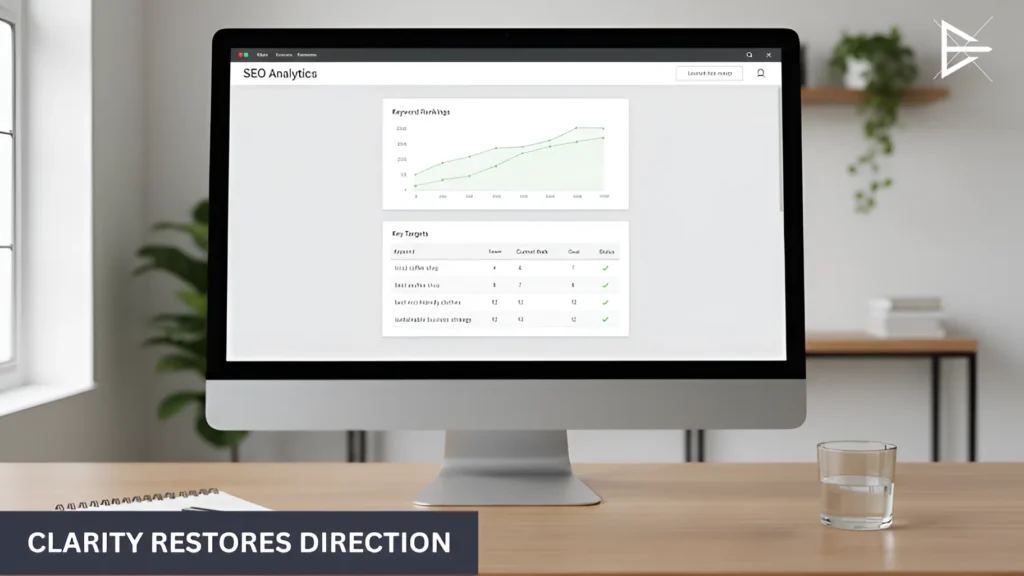
SEO analytics dashboard showing clearer performance trends and actionable data after strategic guidance helps refocus optimization efforts.

The first six months of SEO are mostly about getting the site into a state where growth is even possible. It is not the exciting part. It is the part where things are fixed, cleaned up, and aligned so search engines stop getting confused about what the site is trying to rank for.

By the end of this phase, most sites usually reach a point where:

● Major technical blockers are no longer in the way

Things like broken pages, messy structure, or slow load times are handled. Visitors rarely notice this, but search engines do. If these issues stay unresolved, progress later on is much harder.

● Core pages finally say what they are supposed to say

Service or topic pages stop trying to cover everything and instead focus on matching specific searches. This is often when Google starts understanding where the site fits, even if rankings are still unstable.

● Google crawls the site more predictably

Pages are indexed more regularly instead of randomly. New content does not disappear as often. This is a quiet change, but it matters.

● Rankings start moving, then pulling back

This is where people get nervous. A page jumps up, drops, then comes back. That back-and-forth is Google testing relevance, not a sign something is broken.

● There is finally enough data to make real decisions

You can see which pages attract impressions, which keywords almost work, and which ideas are worth pushing further instead of guessing.

Why SEO Does Not Peak at Month 6

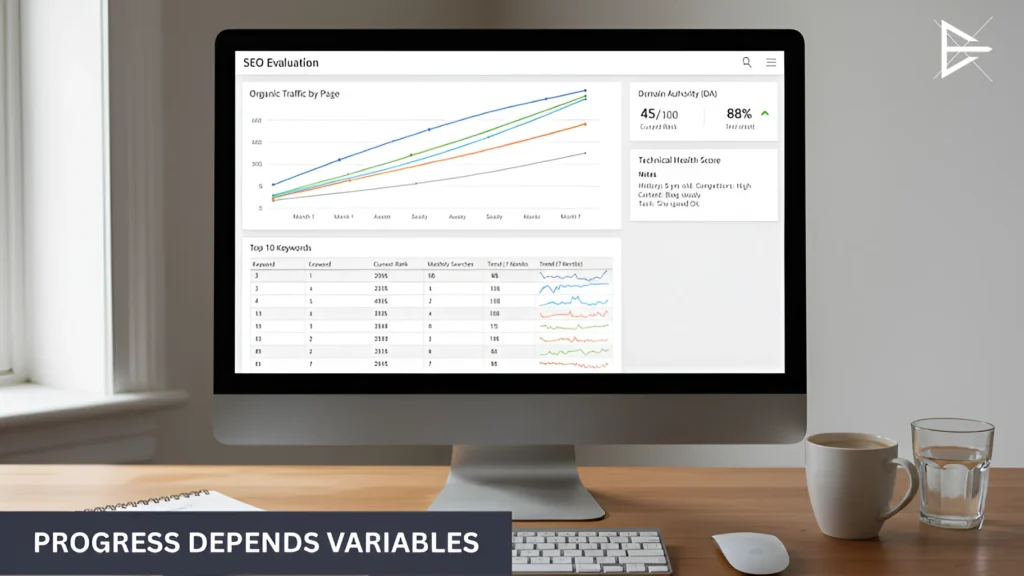
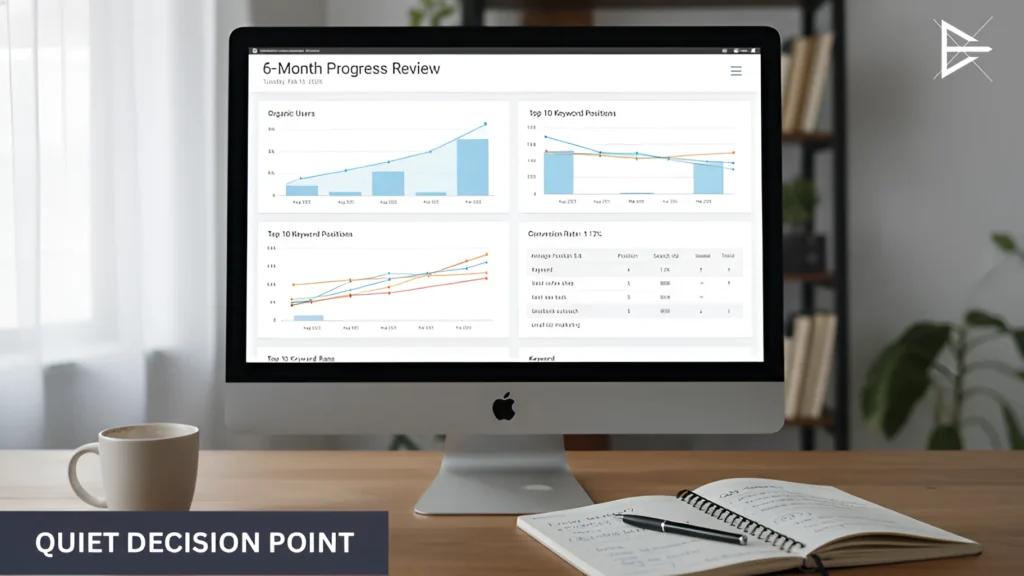
SEO progress review displayed on a desktop monitor as a business evaluates whether to continue optimization efforts after six months.

Month six is usually when doubt kicks in. Not because SEO failed, but because it stopped feeling obvious. Early changes are loud. Later ones are quiet. That shift makes people think progress has stalled when it hasn’t.

Here’s what’s actually going on at this stage:

● This is when Google is still deciding if it trusts the site

Six months gives Google something to look at, not something to rely on. Trust builds from steady behavior over time, not short bursts of activity.

● Everyone else is still working on their SEO

The internet doesn’t pause. If you slow down, you don’t fall behind overnight, but you stop gaining ground. That difference matters more over time than people expect.

● Rankings are still settling into place

Pages move because Google is comparing them to real searches, not guesses. Early swings feel stressful, but they’re part of how positions are earned, not lost.

● Each improvement depends on the last one

Clean structure helps content. Content supports trust. Trust supports rankings. None of that happens all at once, which is why progress feels uneven before it feels stable.

What Real SEO Progress Looks Like After Month 6

Laptop showing stalled SEO performance charts, reflecting inconsistent rankings and slowed momentum after the initial six-month period.

After month six, SEO rarely looks dramatic. It looks quieter and more consistent. Instead of guessing whether something is happening, you start recognizing small patterns that were not there before.

Here are the signs people usually notice first:

● Some rankings finally hold

Not everything moves up, but certain pages stop disappearing. A keyword drops, then comes back. That kind of stability usually means Google is starting to trust the page.

● Traffic starts coming from very specific searches

These are longer phrases, not big headline keywords. The numbers are small, but the intent is clear. This is often where the first real leads or inquiries show up.

● New pages do not feel invisible anymore

When content is published, it gets impressions sooner than it used to. Sometimes within days. That usually means the site itself is carrying more weight.

● Visitor behavior improves before traffic explodes

People stay longer. They click more than one page. Even if traffic volume grows slowly, the quality is noticeably better.

Factors That Determine How Long SEO Takes Beyond 6 Months

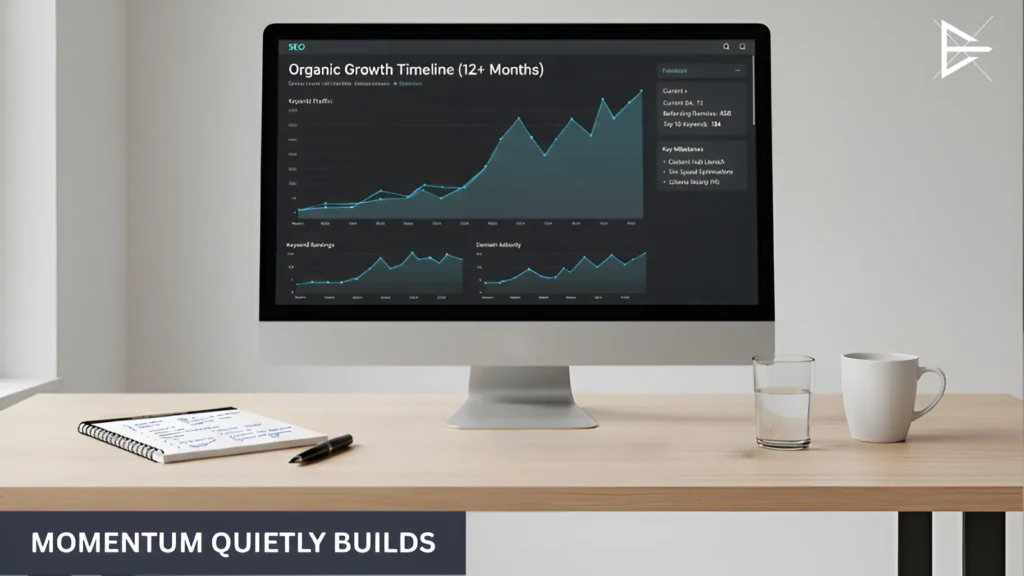
Desktop screen displaying a long-term SEO growth timeline with gradual increases in organic traffic and keyword performance over twelve months.

After the six-month mark, SEO timelines stop being predictable. Two sites can do similar work and move at very different speeds. When that happens, it usually comes down to a few practical limits that shape how fast Google responds.

These are the factors that tend to make the biggest difference:

● How much history the website already has

Older sites often move faster because Google has seen them before. Newer sites, or sites with past problems, usually need more time to prove they are steady and worth trusting.

● How crowded the search results are

Some industries are packed with businesses doing SEO every month. In those spaces, progress is slower and harder to see early. Less competitive searches tend to open up sooner.

● Whether content is improving or just sitting there

Sites that keep updating pages and adding useful content usually gain momentum. Sites that publish once and stop often plateau, even after the first six months.

● How authority is growing over time

When other sites mention or link to your pages naturally, progress often speeds up. Without that outside support, rankings can still improve, but they usually take longer to hold.

● Whether technical issues stay under control

New problems show up over time. Slow pages, broken links, or tracking issues can quietly drag results down if they are not watched and fixed.

A Realistic SEO Timeline After the First 6 Months

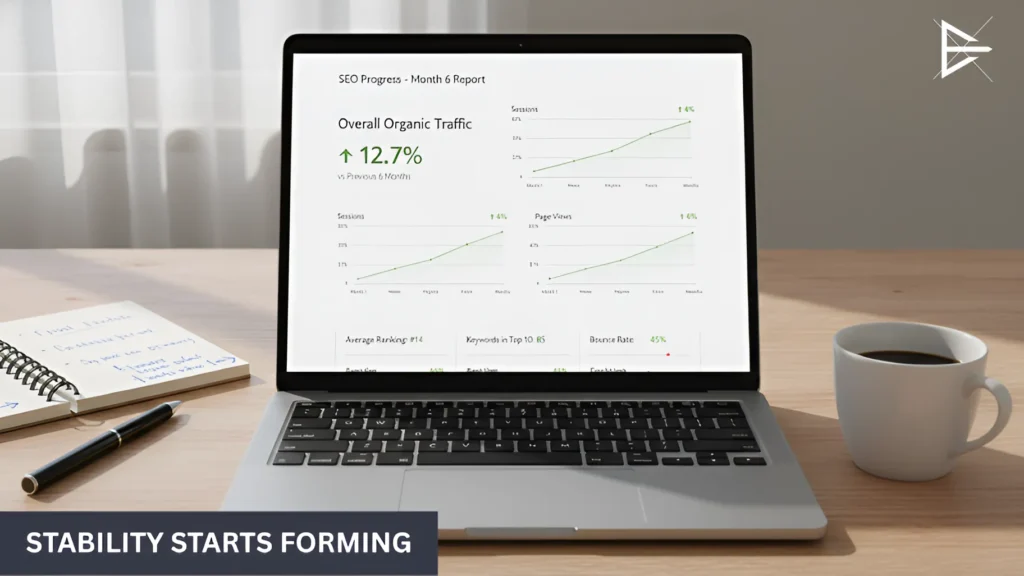
Laptop showing steady SEO performance metrics after six months, with keyword rankings beginning to hold and traffic becoming more consistent.

After six months, most people are no longer asking when SEO will start. They are asking whether it is worth continuing. The months that follow usually answer that question, but not all at once.

This is how progress often shows up if SEO keeps moving forward:

● Around months six to nine, things feel less chaotic

Rankings still move, but they stop acting random. A few pages stay visible longer than before. Traffic does not surge, but it feels more predictable. This is usually when people stop thinking something is broken.

● Between nine and twelve months, results begin to stack

Pages published earlier start pulling in traffic without being touched again. New keywords appear without being targeted directly. Leads feel less accidental and more repeatable.

● After a year, the site stops feeling easy to knock down

New content gets noticed faster. Existing pages are harder for competitors to push aside. SEO becomes less about chasing visibility and more about holding ground and expanding it.

Common Mistakes That Slow SEO After the First 6 Months

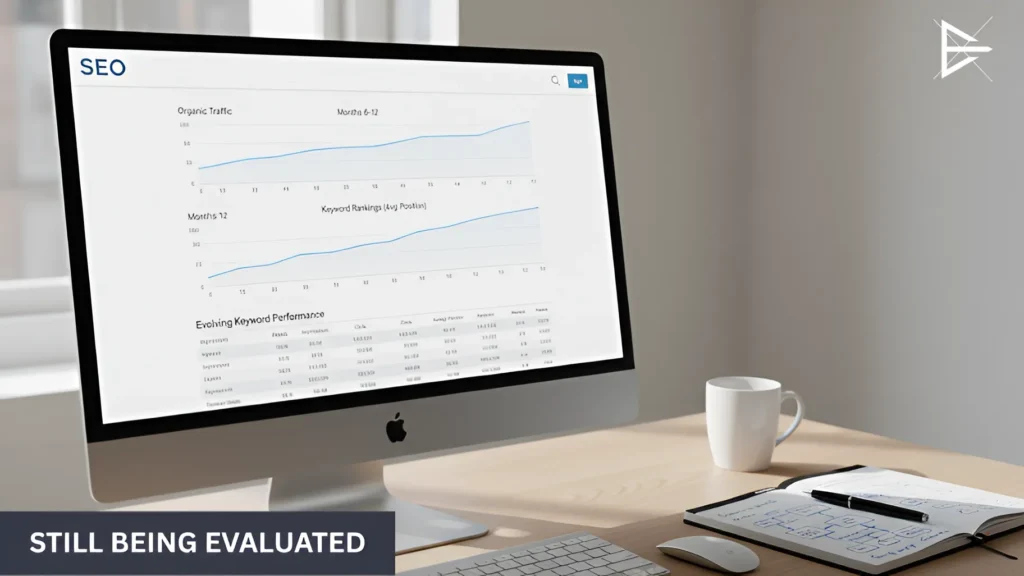
Desktop monitor displaying SEO analytics as rankings and traffic fluctuate around the six-month mark while search visibility is still being evaluated.

After six months, SEO usually slows down for one simple reason. People change how they act once results stop feeling obvious. The work itself often isn’t the problem.

These are the mistakes that tend to cause the most trouble:

● Stopping because it feels like enough time has passed

Six months sounds long, so effort drops. Content pauses. Fixes get delayed. This often happens right before rankings would have started to hold.

● Switching plans every time something moves

A keyword drops and the strategy changes. A page improves and priorities shift again. Nothing stays in place long enough to work properly.

● Thinking results should rise every month

SEO goes quiet sometimes. Flat months happen. Small drops happen. Treating those moments like failure usually leads to pulling back too soon.

● Letting small site issues slide

A slow page here. A broken link there. Tracking stops working. None of it feels urgent, so it waits. Over time, those small issues add up.

● Comparing progress to the wrong examples

New sites get compared to old ones. Small businesses get compared to big brands. That comparison creates pressure that leads to bad decisions.

Is It Worth Continuing SEO After the First 6 Months?

Laptop showing SEO performance dashboard during the first six months of optimization, with early traffic and keyword ranking data on screen.

Around this point, most people stop looking at charts and start thinking. SEO is not new anymore, but it is not finished either. Some things work. Some things feel slow. And the question quietly shows up: do we keep going, or do we stop here?

Most people who continue are thinking about things like this:

● “We’re showing up more than we used to.”

Not winning yet. Just visible. Pages appear. Keywords stick longer. That usually means something is forming, even if it is not obvious.

● “The hard part is already behind us.”

Fixing the site, cleaning pages, building content. That took time. Stopping now would mean walking away after doing the heavy work.

● “This feels slow, but not dead.”

There is a difference between quiet progress and nothing happening. Mixing those two up is where most bad decisions come from.

● “If we stop, this probably fades.”

SEO does not freeze when you pause it. It softens. Competitors keep moving. Restarting later is rarely easier than continuing now.

How I Help When SEO Feels Stuck After Six Months

SEO progress review displayed on a desktop monitor as a business evaluates whether to continue optimization efforts after six months.

By this point, most sites are doing something right. Rankings move a bit. Traffic is there. But it’s harder to tell what’s actually working and what’s just noise. That’s usually when people reach out, not because SEO failed, but because it stopped being clear.

What usually changes once I’m involved:

● It becomes obvious whether SEO is actually stuck or just quiet

Some slow periods are normal. Others aren’t. Once that difference is clear, a lot of stress disappears.

● We stop talking about starting over

Most of the time, there’s already something working. The focus shifts to tightening that instead of tearing everything down again.

● The numbers finally point somewhere

Rankings and traffic stop being things to watch and start being things to act on. Fewer reports. Clearer next steps.

● Small problems don’t get time to grow

Little issues still show up, but they’re handled early instead of piling up in the background.

● Everything starts pulling in the same direction

Pages make more sense together. Changes support each other instead of competing for attention.

Final Takeaway: SEO Is a Long-Term Growth System

After six months, most people stop waiting for SEO to suddenly work and start noticing how it actually behaves. It doesn’t flip a switch. It builds slowly. And once it starts moving, it keeps going as long as it’s not ignored.

What matters most is staying consistent. Small updates. Regular content. Fixing things when they break instead of letting them sit. None of that feels exciting, but over time it adds up. Pages support each other. Results last longer. Progress feels less fragile.

SEO works when it’s treated like something you keep maintaining, not something you try once and judge quickly. When it’s handled that way, it becomes one of the few ways to grow that doesn’t disappear the moment you stop pushing.

Frequently Asked Questions

Is it normal for SEO to feel slower after six months?

Yes, this is very normal. In the first few months, SEO feels faster because obvious problems are being fixed and new content is being added. After six months, those big visible changes slow down because the foundation is already in place. Google has less “new” to react to, so movement becomes quieter.

What usually replaces speed is stability. Rankings move less often, pages stop dropping as hard, and traffic patterns start to repeat. This stage feels slower, but it often means SEO is becoming more reliable instead of more random.

Should I expect big ranking jumps after six months?

Most of the time, no. Large jumps usually happen early, when Google is still testing where pages belong. After six months, Google becomes more careful. Changes still happen, but they tend to be smaller and spread out.

This slower movement is often healthier. Pages that climb slowly are more likely to stay there. Instead of watching rankings jump and fall, you start seeing positions hold, which is what long-term SEO needs.

Why do some pages rank while others don’t after six months?

Google looks at pages individually, not just websites as a whole. Some pages match search intent clearly, answer questions better, or have stronger signals, so they move faster. Others may still be unclear or competing with stronger pages.

This difference is useful, even if it feels frustrating. It shows which pages are close to working and which ones need refinement. Instead of guessing, you can focus on improving what already shows potential.

Is six months enough time to judge SEO results?

Six months is enough time to see direction, but not enough time to see the full outcome. At this point, SEO usually shows whether it is building momentum, not whether it has finished doing its job.

The better question after six months is not “Did this work?” but “Is this forming?” If rankings are stabilizing, pages are getting impressions, and traffic quality is improving, those are signs SEO is moving in the right direction.

What if my traffic hasn’t increased much after six months?

This happens to many sites. Traffic volume often lags behind other improvements. Before big numbers show up, SEO usually improves who visits the site rather than how many people visit.

Longer searches with clear intent often appear first. These visitors stay longer, read more, and are more likely to contact you. Even with low traffic, this stage often brings the first real results that matter.

Does stopping SEO after six months hurt progress?

Most people don’t stop SEO because they decided it failed. They stop because it feels like enough time has passed and the results aren’t obvious anymore. Rankings didn’t crash, but they didn’t take off either. That quiet stretch makes it feel safe to pause.

The issue is that SEO doesn’t pause the way people expect it to. It slowly loosens. Pages stop improving. Small problems go unchecked. Competitors keep publishing. When SEO is picked back up later, it often feels harder than it did before, because momentum was lost instead of protected.

Why do rankings go up and down after six months?

This is usually the moment people start watching rankings too closely. A keyword drops one week, comes back the next, then shifts again. It feels unstable, especially after months of work.

What’s happening is testing. Google is watching how real people interact with the page over time. Pages that recover after drops often end up stronger. The movement feels stressful, but it’s usually part of earning a position, not losing one.

When do SEO results usually become more consistent?

For many sites, things begin to calm down somewhere between nine and twelve months. Rankings don’t freeze, but they stop behaving randomly. Certain pages start showing up again and again instead of disappearing.

That consistency is often the first real signal that SEO is working. It’s not explosive growth, but it’s dependable. And dependable results are much easier to build on than early spikes.

Can SEO results speed up after the first six months?

Yes, and this is something people rarely expect. Early SEO feels slow because everything is starting from scratch. Later on, new pages don’t feel invisible the way they did at the beginning.

Once a site has some trust, each new piece of content benefits from what’s already there. That’s when progress starts stacking instead of resetting, even if the effort stays the same.

Does website age affect SEO timelines after six months?

It still does. Older sites usually have an easier time holding rankings because Google has seen them behave consistently over time. That history makes Google more confident in what the site is about.

Newer sites, or sites with past issues, often need more patience. Their progress isn’t slower because the work is wrong, but because trust hasn’t fully formed yet. Time is still part of the equation.

How much does competition affect SEO progress after six months?

This usually becomes obvious after a few months of watching results. Some keywords feel like they move no matter what you do, while others barely budge. That difference almost always comes down to competition.

In crowded spaces, other businesses are publishing, updating, and earning links at the same time you are. Progress still happens, but it takes longer to show. In less competitive areas, the same work can move faster simply because there’s less resistance.

Is content still important after the first six months?

Yes, and this is where many people get it wrong. After six months, content often feels “done” because the main pages already exist. So publishing slows down or stops.

The problem is that content is one of the clearest signals that a site is still active and relevant. Sites that keep improving and adding content tend to keep moving. Sites that stop often stall, even if their early work was solid.

Do backlinks still matter after six months?

They do, but not in a dramatic way. You don’t usually see instant jumps when a link appears. Instead, backlinks quietly support rankings over time.

As more natural mentions and links build up, pages become easier to hold and expand. Without that support, rankings can still improve, but they’re often harder to keep in place when competition pushes back.

Can technical issues still slow SEO after six months?

Yes, and this is one of the easiest things to miss. Once the big technical fixes are done, it’s easy to assume the site is fine and stop checking.

But new issues show up over time. Pages slow down. Links break. Tracking stops working. None of it feels urgent, but together it can quietly drag results down if it’s not caught early.

How do I know if SEO is actually stuck?

SEO is usually stuck when nothing recovers. Rankings drop and stay down. Traffic trends downward over time. No new pages gain traction, even after months of effort.

Quiet progress looks different. Rankings move, then come back. Some pages show signs of life. Knowing the difference matters, because reacting to quiet progress like it’s failure is how good momentum gets cut off too early.

Is it better to change strategy if results are slow?

This is usually where frustration kicks in. You’ve been doing the work, but nothing big is happening. Rankings aren’t crashing, but they’re not climbing either. At that point, changing everything feels like the only way to regain control.

Most of the time, that move backfires. SEO needs time for changes to settle. When plans shift too often, nothing has a chance to work fully. Small fixes, clearer focus, and patience usually do more than starting over with something new.

Why does SEO feel more confusing after six months?

At the beginning, problems are obvious. Pages are missing. The site is messy. Fixing things feels clear. After six months, those problems are mostly gone, and the signals become quieter.

What’s left is interpretation. Numbers move, but not dramatically. Some pages do better than others. That’s when SEO feels harder, not because it’s broken, but because it’s no longer obvious what to react to.

How long should SEO be continued for best results?

There isn’t a clean stopping point with SEO. The longer it runs, the more it supports itself. Most of the strongest results don’t show up early. They show up after trust has had time to build.

That doesn’t mean constant heavy work forever. It means staying involved. Updating pages. Fixing issues. Adding when it makes sense. That steady care is what keeps results from fading.

Is SEO better than short-term marketing tactics long term?

Short-term tactics feel good because they move fast. You spend, you get traffic, and you see something happen. But once you stop, everything drops off.

SEO works differently. It takes longer, but it doesn’t disappear the same way. When it’s built up and maintained, it keeps sending traffic even during quiet periods. That’s what makes it valuable over time.

What’s the biggest mistake people make after six months of SEO?

They stop too early. Not because SEO failed, but because it stopped being exciting. The fast changes are gone, and progress feels slow and easy to doubt.

Many sites quit right before things would have started to feel stable. At that point, six months of work doesn’t turn into results. It just gets left behind instead of built on.


About the Author

Harvie Ken Colonia

Hi, I’m Harvie!

I started working in SEO back in 2019. After a while, I began noticing the same pattern again and again. The first few months feel active. Things move. Then around the six-month mark, everything gets quieter. That’s usually when people start doubting what’s happening.

What I’ve learned is that this quiet stage doesn’t mean SEO stopped. It usually means it’s settling. Rankings stabilize. Traffic becomes more predictable. The challenge isn’t doing more. It’s understanding what the data is actually showing.

If you’re in that phase and unsure whether to keep going or change direction, that’s where I tend to help. Not by restarting everything, but by figuring out what’s already building and what just needs adjustment.

If you want a clearer read on where your SEO really stands, we can talk.