Growing Online Is a System, Not a Campaign

How Businesses Actually Grow Online Without Running Ads

Understand the visibility, content, and trust pieces that help businesses grow online without running ads.


The Short Answer: How Businesses Grow Online Without Ads

Businesses grow online without ads when people can find them, trust them, and remember them.

It starts with showing up when someone is already searching for help. If people cannot find your business online, growth is hard no matter how good your service is.

Next is trust. When visitors land on your website, they want to know right away if you are legit. Clear explanations, simple language, and real reviews make that decision easier.

Over time, a solid website and helpful content keep working for you. These things do not disappear the moment you stop spending money, and they tend to get stronger the longer they are in place.

What You’ll Learn in This Guide

Why Relying on Ads Slows Long-Term Growth

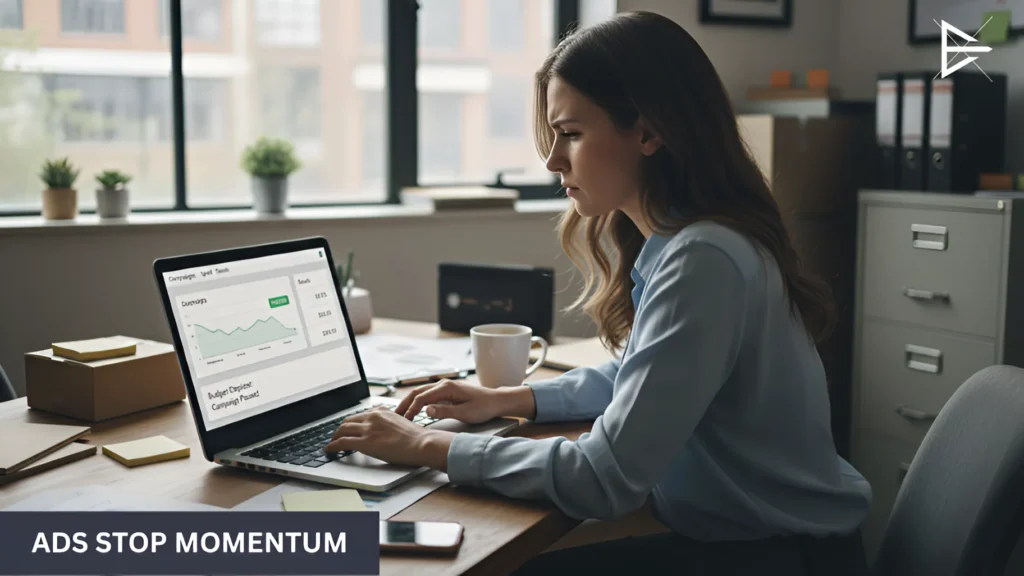
Person reviewing paid advertising performance on a laptop, showing how ad results stop when campaigns pause

Ads can bring attention fast, but they rarely help a business move forward in a stable way.

Most businesses that rely on ads run into the same issues:

● Everything stops the moment spending stops.

Ads do not carry momentum. When campaigns pause, leads usually dry up right away. There is nothing left working in the background.

● They get more expensive over time.

More competition drives up costs. What used to work for a reasonable budget slowly becomes harder to justify.

● People are cautious around ads.

Many users scroll past them without thinking. Organic results tend to feel safer and more trustworthy.

● They do not improve the business itself.

Ads do not fix a weak website, unclear messaging, or poor visibility in search. Once the campaign ends, the business is in the same position as before.

Organic Growth Comes From Building Assets, Not Campaigns

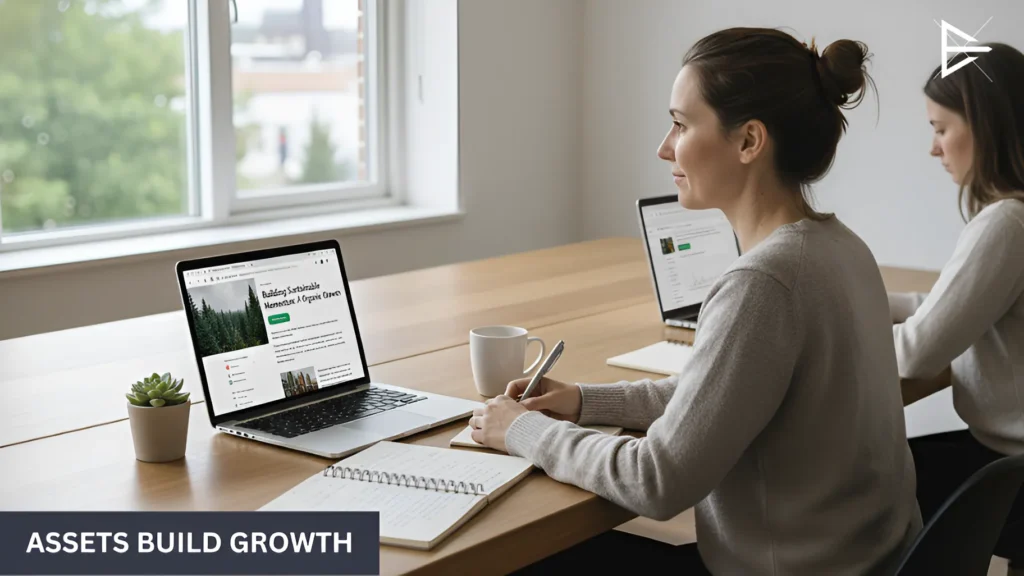
Team reviewing website content and digital assets at a shared desk, representing long-term organic growth

Organic growth works when you build things that stick around. Instead of launching something new every few weeks, you focus on improving what you already have. Over time, those pieces start doing more of the work for you.

● Your website.

Your website should clearly explain what you do, who it is for, and how someone can take the next step. If a visitor has to guess, they leave. A clear site saves time and answers questions before you ever talk to someone.

● Your content.

Content works best when it answers simple questions people are already asking. A single helpful page can bring in visitors for months or even years. You do the work once, and it keeps paying off.

● Your search presence.

Showing up in search takes time, but once it happens, it is harder to lose. Unlike ads, your visibility does not disappear the moment you stop paying.

● Your reputation.

When people keep seeing your business show up with clear information and real reviews, trust builds naturally. You do not have to
convince people. They arrive already more comfortable.

A Website That Explains, Educates, and Converts

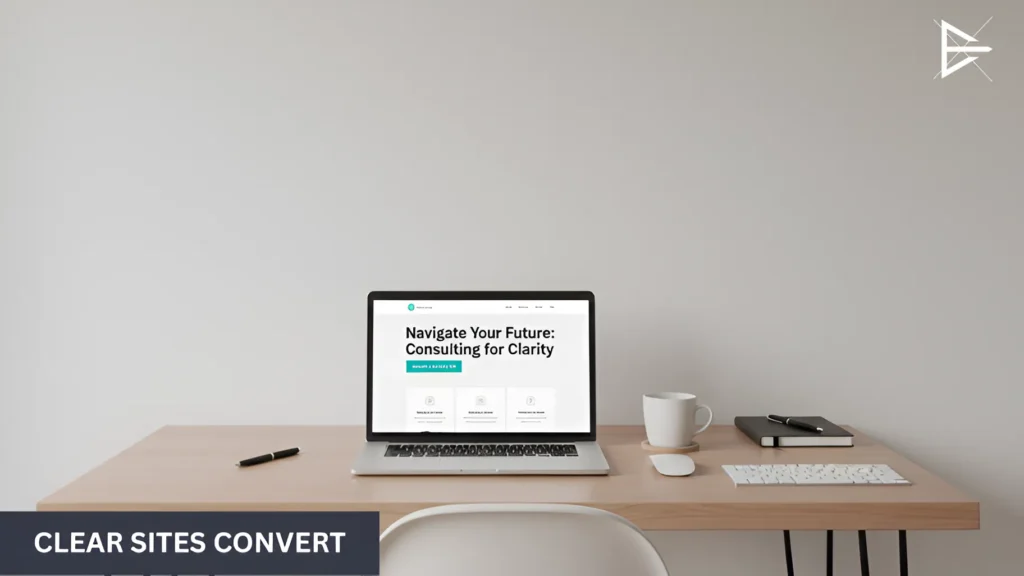
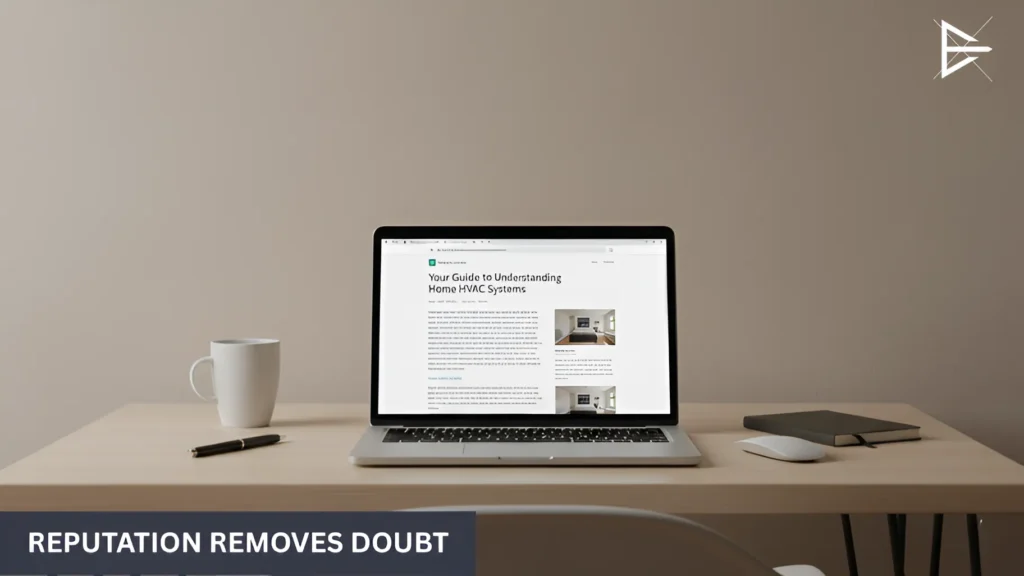
Laptop displaying a detailed blog article on a clean desk, representing content that builds trust before contactMinimal desk setup with a laptop displaying a clear website homepage designed to guide visitors and drive conversions

Most websites fail for one simple reason. They make people think too much. When someone lands on your site, they are trying to answer a few basic questions. If those answers are not obvious, they leave and keep searching.

● Clear messaging.

A visitor should understand what you do within seconds. Not after scrolling. Not after reading three sections. If someone has to guess what you offer or who it is for, the site is not doing its job.

● Problem-focused pages.

People come to your site because they have a problem, not because they want to read about your business. Pages work better when they start with what the visitor is dealing with, then explain how you help. This keeps people reading instead of bouncing.

● A clear next step.

Many sites lose leads because they never tell visitors what to do next. Contact pages are buried. Buttons are vague. A good site makes the next step obvious, whether that is calling, booking, or sending a message.

SEO Puts You in Front of People Already Looking

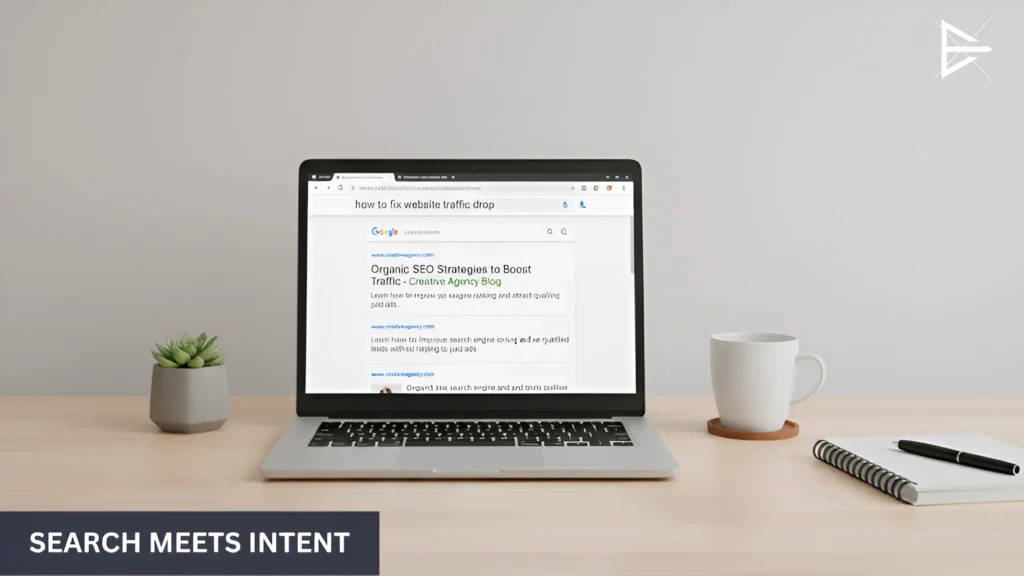
Laptop showing Google search results for a problem-based query, illustrating how SEO connects businesses with active searchers

Most customers do not discover a business by accident. They search because they need help. They open Google and type what they are dealing with. That is the moment SEO matters.

● People search with a reason.

They are not looking to learn what SEO is. They are trying to fix something, compare options, or find someone to trust. When your site shows up for that reason, the visit already has value.

● Problem searches bring better leads.

Someone searching “how do I fix this” or “who can help with this” is very different from someone scrolling social media. These searches usually come from people who are closer to taking action.

● Search visibility does not reset overnight.

When a page starts showing up in search, it can keep bringing visitors long after it is published. You do not have to keep paying to stay visible. That consistency is what makes organic traffic reliable.

Content Builds Trust Before Someone Ever Contacts You

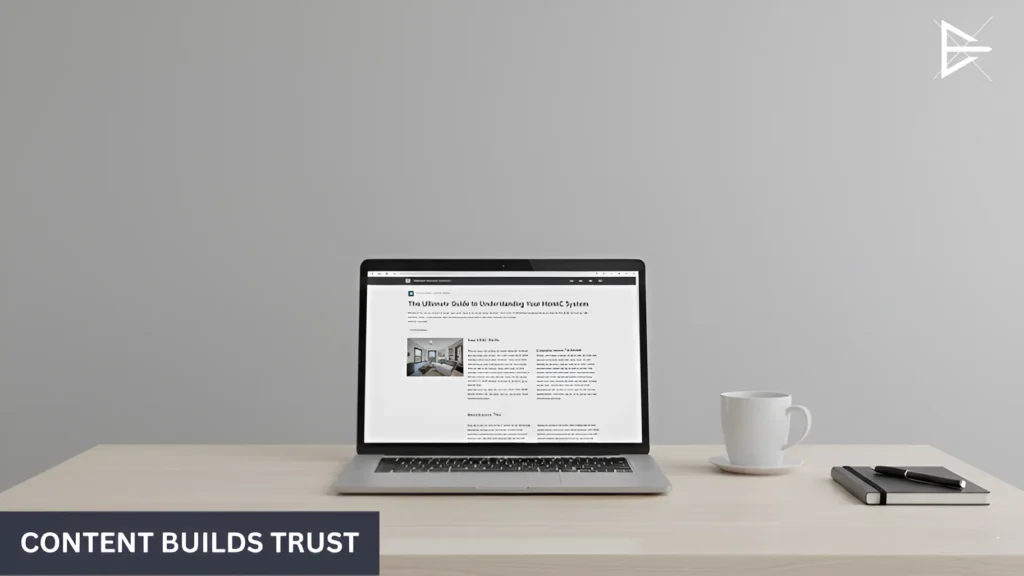
Laptop displaying a detailed blog article on a clean desk, representing content that builds trust before contact

Most people do not reach out after reading one page. They look around first. They read a bit. Sometimes they leave and come back later. Content is what fills in the gaps during that time.

● People read to see if you know what you’re talking about.

They are not looking for perfect writing. They want to see if you understand the problem they are dealing with. When a page explains
something clearly, even in simple terms, it signals experience.

● The questions you answer matter more than how often you post.

The best content usually comes from real conversations. Pricing concerns. Common mistakes. What usually goes wrong. What to expect. When those questions are answered honestly, people relax.

● Old content still does its job.

A useful page does not stop working after it is published. Someone can read it weeks or months later and still get value. Over time,
those pages stack up and quietly build confidence.

Reviews, Visibility, and Word-of-Mouth Still Matter

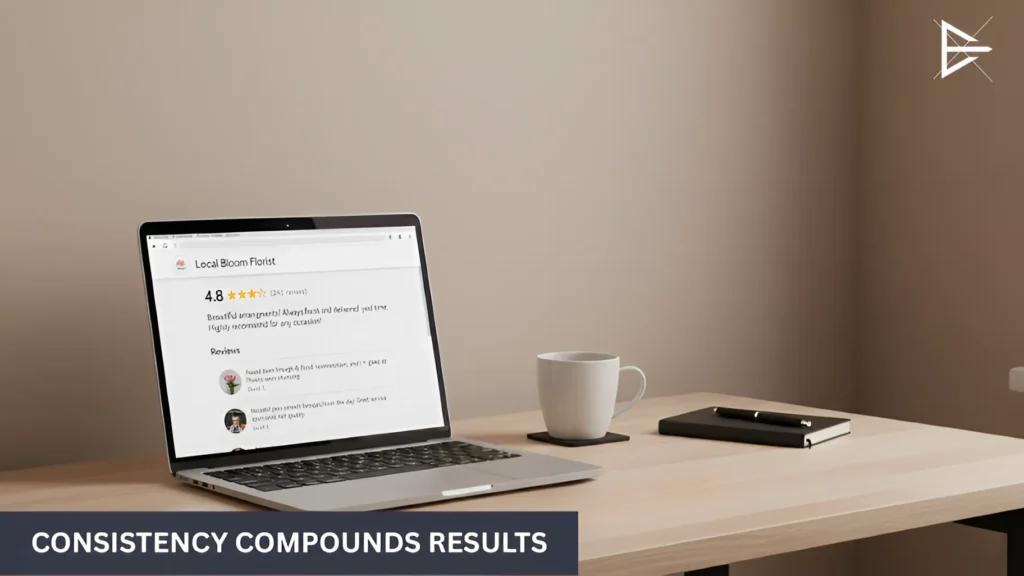
Workspace with a laptop showing customer reviews and business information, highlighting how reputation builds confidence

People do not trust a business just because it has a website. They look for signs that other people have dealt with you before. That usually happens outside your site.

● Your Google Business Profile gets checked first.

Even if someone lands on your website, many will still search your business name. If your profile looks empty, outdated, or ignored,
that creates doubt right away.

● Reviews answer questions you cannot.

People read reviews to see how things actually went. Not the highlights. They look for patterns. Are people satisfied? Do problems get handled? A few real reviews often matter more than a lot of marketing copy.

● Word-of-mouth shortens the decision.

When someone hears about you from a friend or another business, they are already leaning yes. Your online presence just needs to confirm that choice, not fight for it.

This Approach Takes Time, But It Compounds

Laptop displaying steady website performance and reviews on a calm desk setup, showing long-term results from consistent effort

This way of growing a business is quiet at the start. That’s what throws people off. You put work into your site. You improve pages. You publish helpful content. And for a while, it feels like nothing is moving.

That is normal.

● Early progress is easy to miss.

You might notice better questions coming in. Or fewer but more serious inquiries. Traffic does not jump. It just gets a little better. Most people quit right here.

● Showing up consistently matters more than pushing harder.

Doing a lot all at once rarely helps. What works is small, steady improvements. Fixing the same pages. Answering the same questions better. Letting things settle instead of constantly changing direction.

● Results tend to show up later, all at once.

One day a page starts getting found. Then another. Then things feel more stable. It does not feel dramatic. It just feels easier than before.

How I Help Businesses Grow Online Without Relying on Ads

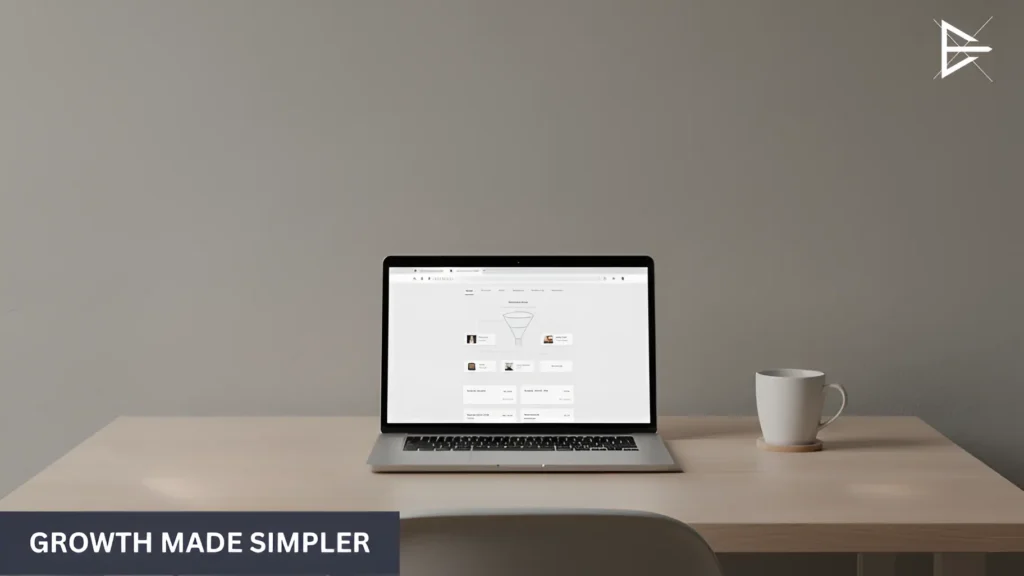
Simple workspace with a laptop showing an organized website dashboard, representing a clear and sustainable growth approach

Most of the time, businesses don’t need more ideas. They need things to make sense again.

When I step in, it’s usually because growth feels scattered. The website exists, content exists, traffic exists, but none of it feels connected. So that’s where I start.

● We slow things down and decide what actually matters.

Instead of adding more pages or trying new tactics, I look at what’s already there. What people are landing on. Where they get confused. What’s being ignored. A lot of progress comes from cutting noise, not adding effort.

● I pay attention to how someone moves through the site.

How they arrive, what they read first, where they hesitate, and where they drop off. Small changes in the order of information or how things are explained often make a bigger difference than a full redesign.

● I focus on the gaps people don’t notice.

Missing answers. Pages that don’t say enough. Content that attracts interest but not the right kind. These are usually quiet problems, but they slow everything down.

● Everything gets built to last.

No quick pushes. No constant reworking. The goal is to set things up so they improve over time and don’t need daily attention to keep working.

Growing Without Ads Is a System, Not a Shortcut

Growing without ads usually looks boring from the outside. It is small changes made over time. A clearer website. Better answers. Showing up more often in the right places. None of it feels dramatic on its own.

What makes it work is how those pieces stack. When people can find you, understand you, and see that others trust you, decisions get easier. You are no longer trying to convince strangers. You are meeting people who are already partway there.

Frequently Asked Questions

Can a business really grow online without running ads?

Yes, many businesses grow online without ads by focusing on being visible where people already look, explaining their value clearly, and building trust over time. Instead of paying for attention, they earn it by answering real questions, showing proof, and making it easy for people to understand what they offer.

This approach usually feels slower at first because there is no instant spike in traffic. But over time, the work compounds. Pages keep getting found, trust builds naturally, and growth becomes more predictable instead of tied to a monthly ad budget.

How long does it take to see results without ads?

Results from organic growth often show up gradually rather than all at once. Early signs might include more thoughtful inquiries, better questions from prospects, or visitors spending more time on your site instead of leaving right away.

For most businesses, meaningful progress takes several months of steady effort. The timeline depends less on speed and more on consistency. The businesses that keep improving the same core pieces usually see stronger results later.

Is SEO required to grow online without ads?

SEO is one of the main ways people discover businesses online without ads. It helps your site appear when someone is actively searching for answers, services, or solutions related to what you offer.

Without SEO, even a well-written website can remain invisible. With it, your business can show up at the exact moment someone is deciding what to do next, which makes organic growth possible.

What matters more than traffic when growing organically?

Trust matters more than traffic. A large number of visitors means very little if they do not understand your offer or feel confident reaching out.

Organic growth works best when the right people find you, not just more people. A smaller audience that trusts you often leads to better conversations and stronger results.

Do I need to publish content all the time?

No, publishing constantly is not required. What matters more is whether the content you publish answers real questions people actually have.

One clear, helpful page that addresses a common concern can outperform dozens of rushed posts. Consistency helps, but usefulness is what makes content work long-term.

What kind of content helps businesses grow without ads?

Content that explains problems, addresses common worries, and sets clear expectations tends to work best. This includes topics like pricing, timelines, mistakes to avoid, and what customers should expect.

When content reflects real conversations you already have with customers, it feels more natural and builds trust faster. People feel understood before they ever reach out.

Why does organic growth feel slow at the beginning?

Early progress is often subtle and easy to miss. You might see fewer inquiries, but they are more serious. Or you might notice people mentioning specific pages when they contact you.

Many businesses quit during this phase because results do not feel dramatic. Those that continue often see momentum build later in ways that feel steadier and more reliable.

Can a small business compete online without ads?

Yes, small businesses often compete well by being more focused and more personal. Clear messaging and helpful content can outperform bigger brands that rely on volume and spending.

You do not need to outspend competitors if you can explain your value better and speak directly to the people you serve.

Does a website really matter that much?

Yes, your website is often where people decide whether to trust you or keep looking. If it is unclear or confusing, visitors leave quickly.

A good website supports organic growth by answering questions, reducing hesitation, and guiding people toward the next step without pressure.

What causes most websites to fail at converting visitors?

Most websites fail because visitors cannot quickly understand what the business actually does or whether it can help them. When messaging is vague, overly clever, or buried too far down the page, people hesitate and leave.

Another common issue is the lack of a clear next step. If visitors have to search for a contact button, booking link, or clear instruction, most will not bother. A website should reduce thinking, not add to it.

How do reviews help with organic growth?

Reviews act as social proof that your business delivers what it claims. People read them to see how real situations were handled, not just whether others were happy.

Over time, reviews also reinforce trust across your entire online presence. They support search visibility, reduce hesitation, and make people more comfortable reaching out before they ever contact you.

Is a Google Business Profile important even without ads?

Yes. Even when people find your website through search or referrals, many still look up your business name to confirm legitimacy. Your Google Business Profile often becomes a second checkpoint.

If the profile looks active, complete, and reviewed, confidence increases. If it looks neglected or empty, doubt appears quickly, even if the website itself looks good.

Can old content still bring in leads?

Yes. Content that answers common questions or explains problems clearly often becomes more valuable over time, not less. As search visibility improves, older pages can continue attracting visitors without additional work.

This is one of the biggest advantages of organic growth. You build once, refine occasionally, and the content keeps supporting your business quietly in the background.

Why do problem-based searches matter?

Problem-based searches usually come from people who are already aware of an issue and are actively looking for a solution. These searches signal intent, not curiosity.

When your business shows up for these queries, conversations tend to start at a higher level. Visitors are closer to making a decision and often arrive with more focused questions.

Is organic growth more reliable than ads?

Over time, organic growth is often more reliable because it does not depend on continuous spending. Pages and visibility built through search and content do not disappear overnight.

Ads can create quick results, but organic growth creates stability. Once momentum builds, results tend to be easier to maintain and less affected by budget changes.

Do I need to be active on every platform to grow online?

No. Trying to maintain every platform usually leads to burnout and inconsistent quality. Most businesses benefit more from focusing on the places where their audience already looks for answers.

For many, that means search results and a strong website. A smaller, focused presence often performs better than being everywhere without direction.

What is the biggest mistake businesses make when avoiding ads?

The biggest mistake is spreading effort too thin. Trying multiple strategies at once without a clear plan often creates confusion and slows progress.

Organic growth works best when improvements build on each other. Focusing on a few core areas and refining them over time usually leads to better results.

Can referrals still matter in online growth?

Yes. Referrals remain one of the strongest trust signals because someone else has already done the vetting. People arrive with confidence instead of skepticism.

A strong online presence supports referrals by confirming what they were told. When the website and reviews match expectations, decisions happen faster.

Is organic growth worth it for service-based businesses?

Yes. Service businesses depend heavily on trust, clarity, and reputation. Organic growth supports all three by helping people understand what to expect before contacting you.

When prospects feel informed and confident early, conversations become easier and more productive. That often leads to better-fit clients and smoother engagements.

When does it make sense to get help with organic growth?

It usually makes sense to get help when effort feels scattered and progress feels unclear. Content exists, traffic exists, but results feel inconsistent or unpredictable.

Guidance can help identify what to focus on, what to fix, and what to ignore. The goal is not more work, but clearer direction and better use of effort over time.
About the Author

Harvie Ken Colonia

Hi, I’m Harvie!

I started working with SEO and website management back in 2019. At the time, I was more curious than strategic, trying to understand why some businesses kept getting found online while others stayed invisible no matter how hard they tried.

Over time, a pattern showed up. The businesses that grew were not chasing trends or pouring money into ads. They focused on being clear, answering real questions, and making their websites easier to trust and easier to use.

That way of thinking shapes how I approach online growth today. I focus less on quick wins and more on systems that keep working quietly in the background. The ideas in this article come from that same place.