Do my website, Google profile, and social media really need to work together?
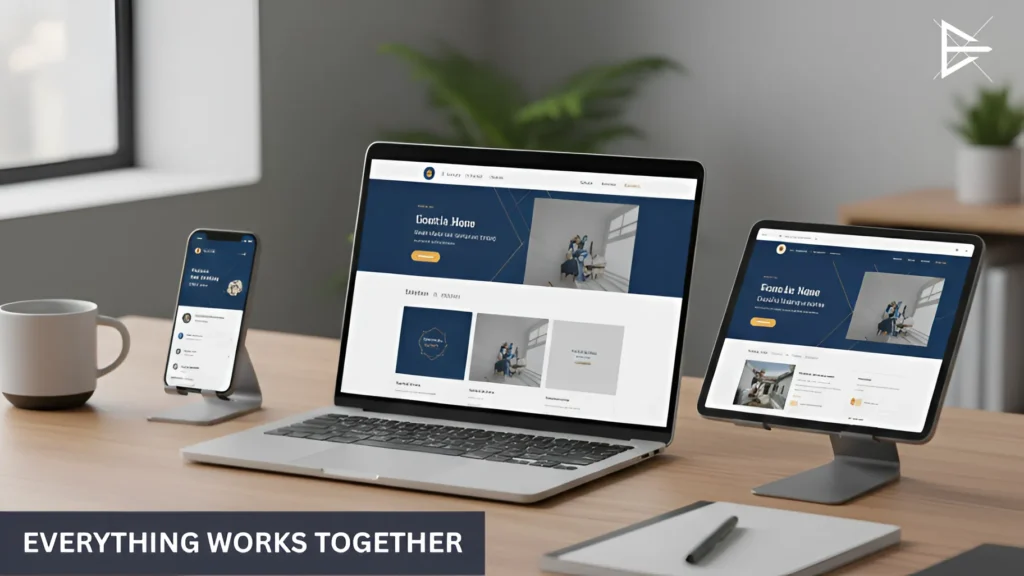
Yes. Most customers do not interact with just one platform before deciding. They might find you through search, visit your website, and then check social media to see if your business feels real and active. When those pieces line up, the decision feels easier.
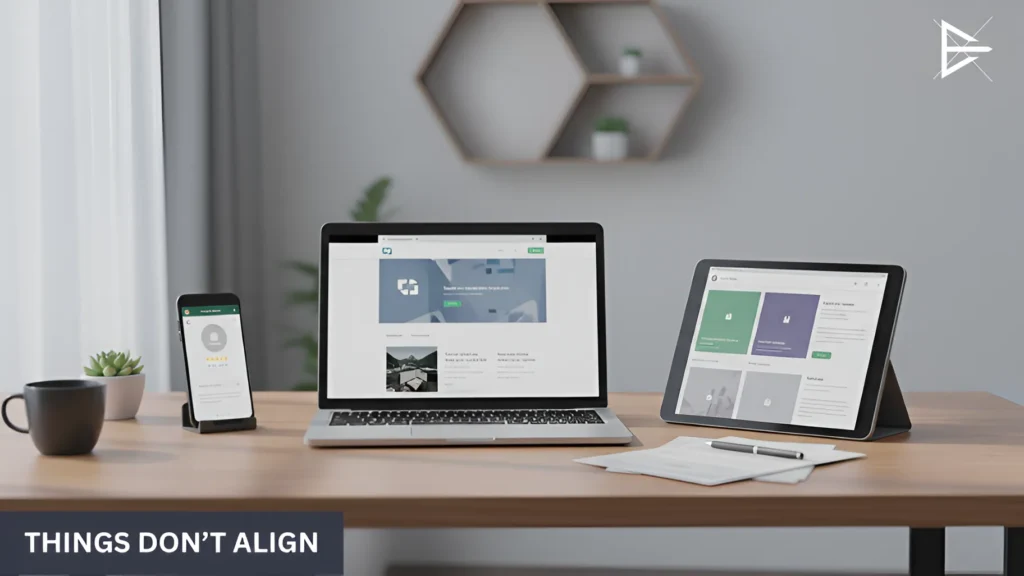
When they don’t work together, small inconsistencies slow people down. Even if nothing is “wrong,” confusion creates hesitation, and hesitation often leads to people choosing another business instead.
What happens if my website and Google profile don’t match?
When details don’t match, people start questioning which information is correct. That doubt usually shows up before they ever contact you, and most people won’t ask for clarification. They’ll just move on.
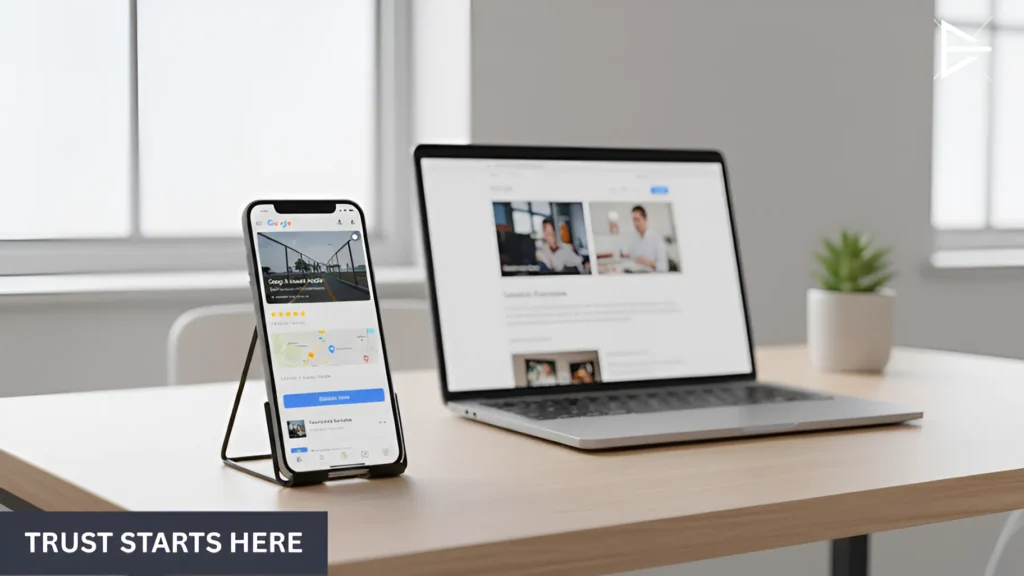
Matching details builds quiet trust. When someone clicks from your Google Business Profile to your website and sees the same services and messaging, it confirms they’re in the right place.
Is my website more important than social media?
In most cases, yes. Social media helps people become familiar with your business, but your website is where they usually decide whether to reach out.
Your website is where people slow down, read, and look for answers. If the website isn’t clear, social media attention rarely turns into real inquiries.
How does my Google Business Profile help my business?
Your Google profile puts your business in front of people who are actively searching. These users aren’t browsing casually. They’re trying to solve a problem right now.
It also gives quick trust signals. Reviews, photos, and clear service information help people decide whether you’re worth clicking on before they ever visit your website.
Why do people check social media before contacting a business?
Most people aren’t ready to buy when they check social media. They’re looking for reassurance that the business is real, active, and consistent.
Social media helps answer emotional questions like “Does this feel legit?” or “Is this a business I’d be comfortable contacting?” That comfort matters more than many businesses realize.
Can social media replace my website?
No. Social media is not designed to explain your services in depth or guide people through decisions clearly.
Your website is still the place where details live and decisions happen. Social media supports that process, but it rarely replaces it.
What does “alignment” actually mean in simple terms?
Alignment means your services, wording, tone, and next steps make sense everywhere someone finds you.
People shouldn’t feel like they’re learning something new each time they switch platforms. Familiarity builds confidence.
Why does my online presence feel messy even though everything looks fine?
Because updates happen at different times. A service gets added to the website, but not the Google profile. Social media keeps using older wording.
Nothing looks broken, but things slowly drift apart. That drift is what creates confusion for customers.
How does branding affect trust?
Branding helps people recognize and remember you. When everything looks and sounds consistent, your business feels more stable and reliable.
When branding shifts too much, people hesitate, even if they can’t explain why. Familiarity reduces risk in their mind.
Do I need to be active on every platform?
No. Most businesses don’t benefit from trying to be everywhere. Being on too many platforms often leads to rushed updates, inconsistent messaging, and burnout. Customers don’t expect to see you on every app. They just want to understand what you do and feel confident about it.
It’s usually better to focus on the platforms that matter most to your audience and keep those clear and consistent. A well-maintained website, an accurate Google profile, and one or two active social channels often work better than spreading yourself thin.
Why do people visit but not contact my business?
In many cases, it’s not because they aren’t interested. It’s because something feels unclear. They might not fully understand your services, your pricing approach, or what happens after they reach out.
When people are unsure, they pause. And when they pause, they often leave instead of asking questions. Clear messaging and obvious next steps reduce that hesitation and make reaching out feel easier.
What role do reviews play in this system?
Reviews act as social proof that supports everything else you’re saying. They help confirm that your business delivers what it promises. For many customers, reviews are the final reassurance they need before taking action.
When reviews match your messaging and services, trust builds quickly. When they feel outdated, inconsistent, or unrelated, people start to question whether your business is still a good fit.
Should my calls to action be the same everywhere?
They don’t have to use the exact same words, but they should guide people toward the same result. Whether someone is on your website, Google profile, or social media, the next step should feel familiar.
If one platform pushes calls, another pushes messages, and another has no direction at all, people hesitate. Consistency helps customers move forward without overthinking what to do.
How often should I update my Google profile?
Any time something changes, your Google profile should change too. That includes services, hours, service areas, photos, or business details. Outdated information creates doubt quickly.
Even small updates, like adding photos or responding to reviews, signal that your business is active and paying attention. That activity matters more than many businesses realize.
Is branding just logos and colors?
No. Branding also includes how you explain your services, the words you use, and the tone you communicate in. It’s how your business “sounds” as much as how it looks.
Two businesses can use similar colors and still feel completely different. Clear, consistent language plays a big role in how professional and trustworthy your business feels.
Can small inconsistencies really hurt conversions?
Yes, because small inconsistencies create friction. Friction slows people down. And slowing people down often leads to them leaving.
Most customers won’t consciously notice what’s wrong. They just feel unsure. Removing those small points of confusion makes it easier for people to decide.
What’s the biggest mistake businesses make with their online presence?
Treating each platform as a separate task instead of one connected experience. Updates happen in isolation, and no one checks how everything looks together.
Customers don’t see platforms the way businesses do. They see one business, and they expect it to make sense wherever they find it.
Do I need more content to improve results?
Not always. More content doesn’t help if the message itself is unclear or inconsistent. In many cases, better alignment improves results faster than adding new pages or posts.
Clarity removes obstacles. Once things are aligned, content has a much better chance of working the way it’s supposed to.
How can I tell if my online presence is aligned?
A good test is to look at your business from the outside. Start with search, then visit your website, then check social media. Ask yourself if it all feels like the same business.
If services, tone, and next steps feel familiar at every stage, alignment is likely strong. If something feels off, that’s usually where improvements are needed.
When should I consider getting help with alignment?
When managing your online presence feels harder than it should, or when results don’t match the effort you’re putting in. That’s often a sign of misalignment, not a lack of work.
An outside perspective can spot gaps that are easy to miss when you’re close to the business. Sometimes small adjustments make a bigger difference than major changes.