Why isn’t my social media working even though I post every day?
Posting every day shows effort, but effort alone does not guarantee results. If your posts do not clearly connect to a purpose, they often feel isolated. People might see them, but they do not know what to do next, so nothing builds over time.
Social media works best when each post supports something bigger. When posts are shared without direction, daily posting turns into activity instead of progress. That is why showing up consistently can still feel frustrating.
Is posting every day bad for social media growth?
Posting every day is not bad, but it is not always helpful. Daily posting only works when your content gives people a reason to stop, read, or engage more deeply. Without that, frequent posting just increases the chances of being ignored.
For many people, posting less with more intention creates better results. Growth usually comes from clarity and relevance, not volume.
Why do I get likes but no messages or inquiries?
Likes are a low-effort response. They often mean someone agrees or relates, but they do not mean someone is ready to take action. Without guidance, people stop at liking the post.
Messages usually happen when content feels personal and clear. When people recognize their own problem and see a simple next step, reaching out feels natural.
Does the algorithm punish me for low engagement?
Most platforms adjust reach based on how people interact with your content. If people scroll past quickly or do not engage, the platform assumes the post is not holding attention.
This does not mean you are being punished. It means the platform is reacting to user behavior. Improving clarity and relevance usually helps more than posting more often.
What matters more than posting frequency?
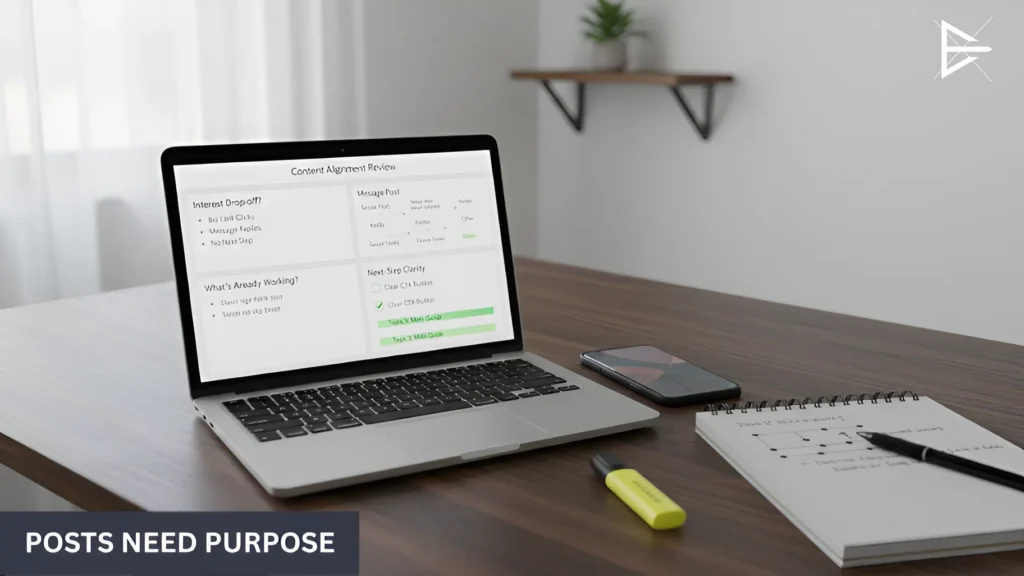
Clarity matters more than frequency. Knowing who you are talking to, what each post is meant to do, and what should happen next has a bigger impact than how often you post.
When those pieces are clear, even fewer posts can perform better. Posting becomes more intentional instead of routine.
How do I know who my content is really for?
Look beyond likes and views. Pay attention to who messages you, asks questions, or replies thoughtfully. Those signals show who actually connects with your content.
Over time, patterns appear. Certain topics or angles will attract the same type of person repeatedly. That is who your content is really for.
Why does my content feel helpful but forgettable?
Content often feels forgettable when it stays too general. Helpful advice that applies to everyone rarely feels personal enough to stick.
When content speaks to a specific problem or situation, people remember it. They feel seen instead of informed.
What is the difference between an audience and a buyer?
An audience may enjoy your content and engage with it casually. A buyer sees their own situation in what you share and feels like you understand their problem.
Buyers respond to clarity and relevance. They act when content feels directly connected to something they already want to solve.
Why do people leave my profile without doing anything?
Most people scan profiles quickly. If they cannot tell what you help with or why they should stay, they move on.
Clear positioning and one obvious next step make profiles easier to understand. When visitors do not have to guess, they are more likely to act.
What should my social media bio focus on?
Your bio should explain who you help and how you help them. It should focus on outcomes or problems, not just titles or interests.
A clear bio removes hesitation. People should know within seconds if your content is relevant to them.
Do all posts need to sell something?
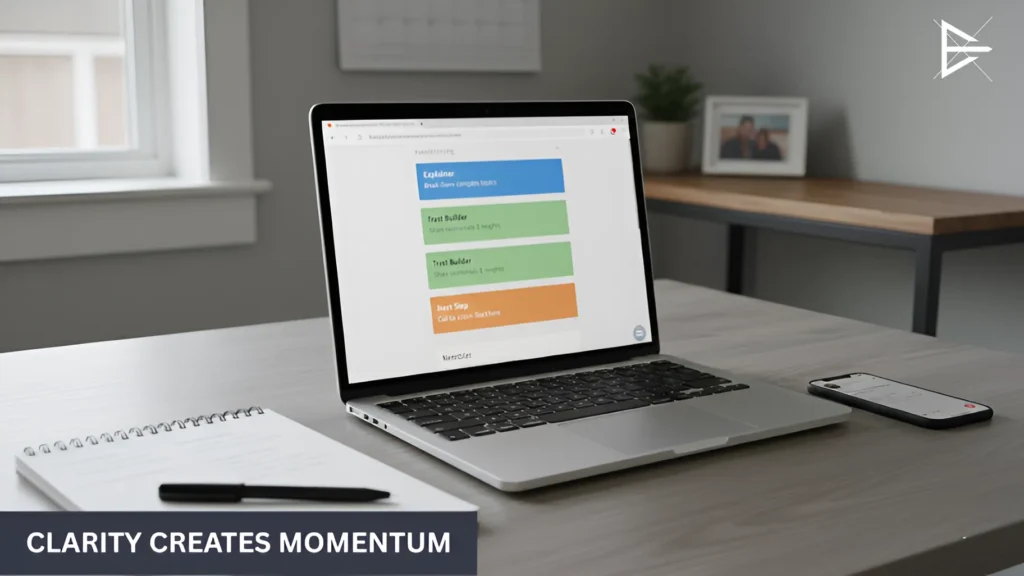
No. Not every post should sell, but every post should have a purpose. Some posts educate, some build trust, and some guide action.
When posts have different roles, they work together. That is what creates momentum instead of randomness.
Why does my content feel disconnected from my goals?
Content feels disconnected when posts are created without thinking about outcomes. If posts are not tied to a bigger direction, progress feels unclear.
When you know what you want content to lead to, it becomes easier to choose what to post and what to skip.
How do I avoid sounding salesy when asking for action?
The key is to treat action as guidance, not persuasion. You are not trying to convince someone to do something they do not want to do. You are helping them understand what makes sense after reading or watching your content. A simple question or suggestion often feels more natural than a call to action that sounds rehearsed.
People usually appreciate clarity. If they found your post helpful, telling them what they can do next removes guesswork. Asking “Want help with this?” or “Message me if this sounds familiar” feels very different from pushing an offer. One invites a conversation. The other feels like pressure.
Why do people engage but never follow up?
Engagement shows interest, not readiness. Someone can like a post or leave a comment because it resonates, but still feel unsure about taking the next step. That hesitation often comes from not fully understanding what happens after they reach out.
When there is no reassurance or clear direction, people pause. That pause feels harmless, but it often turns into doing nothing. Following up becomes easier when people know what they are stepping into and feel comfortable doing so.
What builds trust on social media?
Trust builds when people see consistency over time. Saying similar things, showing up with the same tone, and sharing real experiences helps people feel grounded. They start to believe you are not just posting for attention.
Small details matter more than polished branding. Honest thoughts, simple explanations, and sharing what you have learned from real situations help people feel like you are genuine. Trust grows when people feel they know what to expect from you.
Why do people wait even when they trust me?
Trust removes fear, but it does not always create urgency. Someone can trust you and still think, “I’ll deal with this later.” Without a reason to act now, waiting feels safe and easy.
Helping people understand why timing matters makes action feel more reasonable. That does not mean pressure. It means showing how the problem affects them today, not someday. When the moment feels relevant, decisions feel lighter.
Should everything stay on social media?
Social media is great for attention and discovery, but it is not always where decisions happen best. People are distracted, scrolling quickly, and jumping between posts. Even interested people can lose focus.
Moving people off social gives them space to slow down. A message, a page, or a short form removes noise and helps them concentrate. That quieter space often makes follow-through easier.
What is the best next step to offer followers?
The best next step is one clear action that matches the content. Asking people to choose between many options creates hesitation and delay. One clear path makes the decision feel simpler.
That next step does not have to be big. A message, a reply, or a link is often enough. When people know exactly what to do next, they are more likely to do it.
Which social media metrics actually matter?
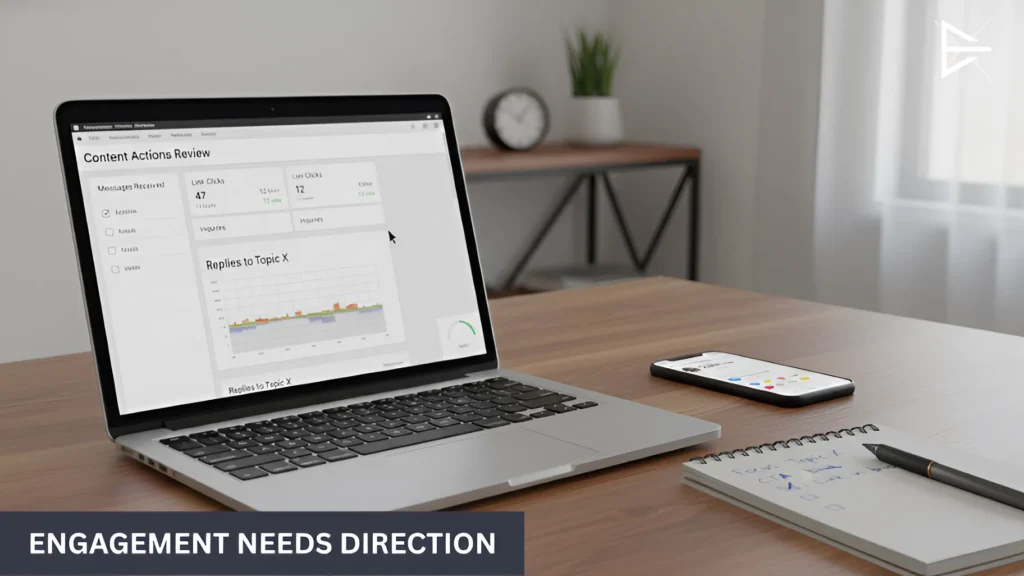
Metrics that show movement matter more than numbers that only look good. Messages, replies, link clicks, and questions show intent. They show that someone did more than just scroll.
Vanity metrics like likes and views can be encouraging, but they do not always reflect progress. Real outcomes help you understand what content is actually working and what is just noise.
When should I consider getting outside help with social media?
If you are putting in consistent effort but still guessing what is wrong, it may be time for outside help. When everything feels unclear, a fresh perspective can spot issues you no longer see.
Guidance helps you focus on what matters instead of trying everything. It can save time, reduce frustration, and help you move forward with more confidence instead of trial and error.